
Up On A Limb
A veteran soldier climbs Everest with one arm.
Our film Up On A Limb was chosen as part of the Official Selection for the 2019 Kendal Mountain Film Festival.
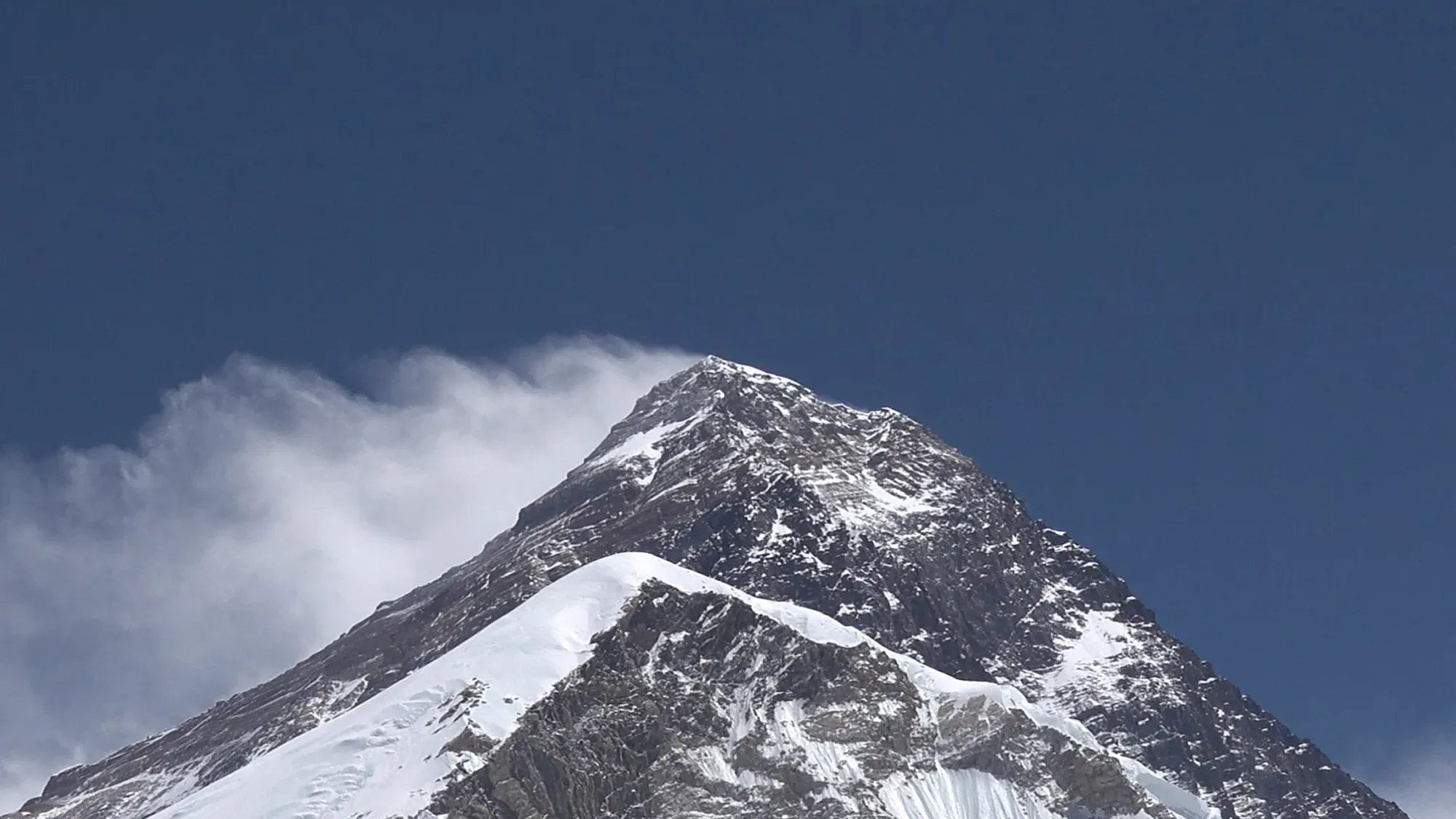
In 2019, a team of disabled adventurers are on a mission to be the first disabled team in history to complete the notorious Grand Slam. Very few adventurers have completed all stages of this impressive feat, which entails summiting the highest peak on each of the 7 continents and walking unsupported to the geographic North and South Poles. The Adaptive Grand Slam team will learn to climb using modified techniques and equipment in order to take on the world’s most challenging mountains. We had the pleasure of editing together the footage filmed during the summit, producing both a trailer and a long-form video.
Watch the full film here:


This film is part of our documentary and editing and post-production work. See all the films we make.
Read the transcripts
Up on a Limb
A round of bullets came in and one went straight through my chest. It just dropped me. It dropped me like a sack of potatoes instantly. Section, 200!
My lead man stepped over a ditch. There's a hole in your front! Proper! I jumped over the ditch and landed on a pressure pad IED.
It's hard work overtaking people. They're massive queues because there's so many people. I've got climbing altitude going on. I could really do with a ramp right now.
I can't believe it. F*****g hell.
Up On A Limb
It's important for every expedition to have a pooja and really that's a blessing from the mountain to the guys to give a safe passage on the mountain. A few days after us arriving at base camp our expedition leader and our sirdar invited us to attend a pooja. We all put different items down. I chose to put my beret down which was really probably a symbolic act given that it was the beginning of my journey to Everest.
A round of bullets came in and one went straight through my chest. It just dropped me. It dropped me like a sack of potatoes instantly. The bullet went straight through my chest, didn't deviate and it collapsed my lung.
It severed all the nerves to my right arm. It severed the artery providing the blood supply to my right arm and it went straight through my scapula and took all that out the back with it. I came out of coma and I had multiple operations over a six-week period in hospital including a vein graft so my left arm was sliced open and from the from the arm they extracted veins to then reconnect the blood flow into my right arm. Every time we went out from I'd say the 50 June we was under contact.
My lead man stepped over a ditch. I jumped over the ditch and landed on the pressure pad IED. That blew me up in the air. There was a massive bang and then I dropped onto the floor.
I tried to stand up because at this point I still didn't realize it was me. It collapsed on my leg which was severely broken so it was still attached. It was just you know it was like a dot to dot the bone so I collapsed on that. At this point I put my right hand in to get a first field dressing so just a bandage effectively for my leg and that's when I realized that my little finger was blown off and it was just a bone sticking out the side.
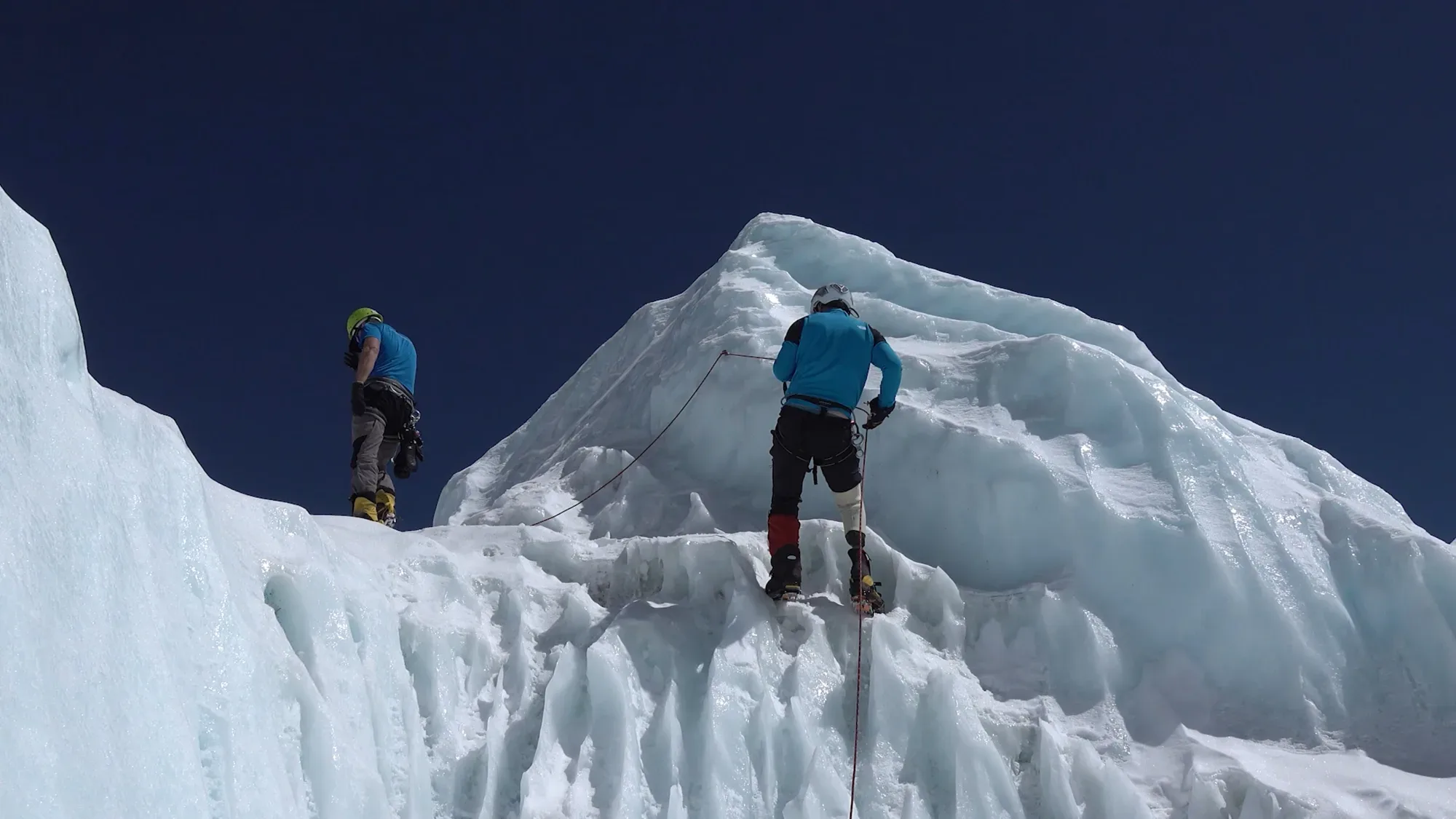
Well good morning I'm Whitty and I'm the lead guide and this morning we're gonna head down for a bit of practice training on a wee confidence course that we built a couple days ago. For Martin and Terry it's much more of a challenge than able-bodied members but you guys are so good that you just about put them to shape. If you're going into an environment where you're going to be tested by the environment itself the last thing you want is to doubt your skill base. The importance of training is it becomes natural so the more and more you do it if you do one ladder crossing the second one you do is still hard.
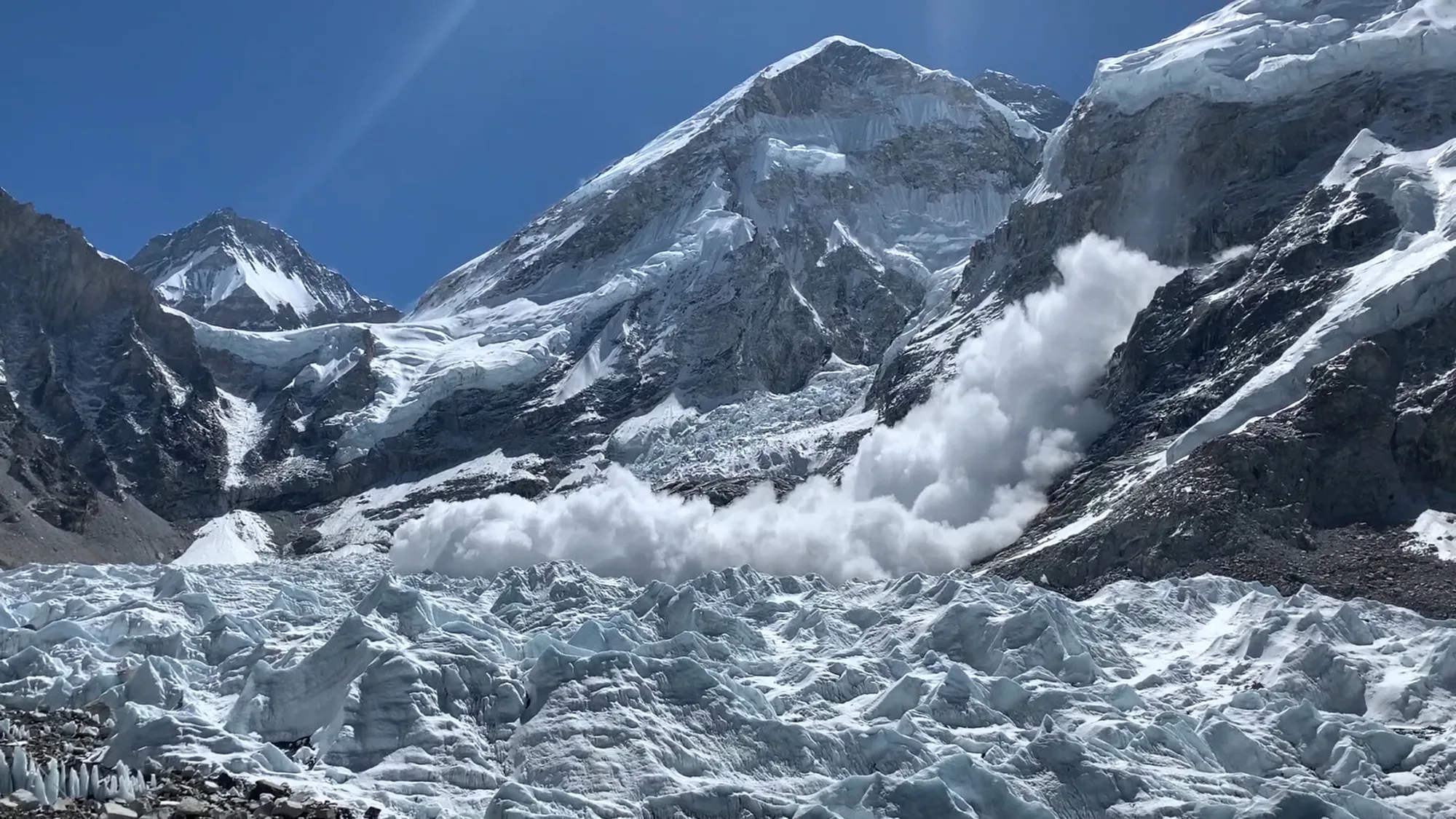
If you do 10,000 ladder crossings it's completely normal to you. You haven't got the basics right you haven't got a chance of achieving success when things start going on because of the environmental because of nature. So most teams on Everest will acclimatise by walking up and down on the mountain itself and they'll get to a new altitude each time they do that and they'll come back down to base camp. That means they're going through the Khumbu Icefall multiple times which is the area of the highest uncontrollable risk on the mountain.
This is the base of a V-shaped valley which most of the avalanches that hit the mountain falls into. So instead we chose to climb another mountain close to Everest called Pumori. We're heading up to Pumori Camp 2 today which is about 6200m. We're just sorting our kit out and we're leaving at 0630.
Pumori was technically much more difficult to climb than Everest and it hadn't been climbed by any teams for quite some time. To Camp 1, now we start the transition to Camp 2. I feel good overall. I felt behind a little bit.
It's still in weather at the minute. Great view of base camp. We can also, if you have a look, see the top of the Khumbu Icefall. So it should be a great day walking.
Technical luck climbing out this year is going on. So much fun. I could really do with a right hand right now. I've seen this ridge line in front of me.
It was first devastation because I knew how brutally hard it was. The biggest problem with traversing, this is one reason why I hate traversing and ridge lines which are thin, is I've got all the nothing on my prosthetic leg. So where we left leg I can feel the snow, put my foot down, you can push it a little bit, put 20% pressure on and the snow will either give or stay. With my prosthetic leg, I put all my weight on it straight away so there's no give back from these, no feel.
As soon as I put that weight on, if it goes I fall. It's something that I wasn't comfortable with. It was like a tightrope, effectively, with thousands of feet drop either side. So it puts a fear of guarding some of these ridge lines because before any warning I'm falling.
Fucking hell cheers mate. So it's not something that I enjoy. Martin and everyone was waiting at camp too. Hopefully, you'll get halfway across and your leg will fall off.
What? Hopefully you'll get halfway across and your leg will fall off. Yeah, I'm fucking dying for that. Foul and climbing.
Tension on the right. Try and lean out, try and lean out mate and then put your feet on that leg now. When I got there I said to Martin, look there's no way I can go any higher if it's harder terrain. Terry made the right call to stay at camp too because of the technical demands above camp too would have resulted in having to kick in hard on his crampons front foot which would have put a lot of pressure on his stump.
I said, look, I'm not physically, particularly tired. I can keep going for another couple of hours. That's not the issue. The issue is how technically demanding it is for me and how degrading it will be on my stump.
So the first time coming down for Maury, I was descending down roughly a 200 meter pitch. I'm quite good at abseil and go straight through the figure of eight and I can sort of run down if you like. But what happened was my prosthetic leg kicked into the ice, my knee popped out of joint, so I dislocated my knee. Luckily, it went straight back in and then it popped straight back out again, a sort of meter or two down.
You can imagine the pain that caused and from that point on where it should have took me an hour to get to camp one, it's probably took me about four hours and that's when I knew it was sort of quite a big problem. Well, we just hang around a little ledge of Maury here. We're not far out of camp three. We've just broken the back of the most steepest and technical bit of ground.
I was at a point where the altitude was constantly hitting me harder and harder and I had to stop for a bit and then I bent down on both knees, couldn't stand up and just started retching. I was kind of cursing myself that I just spent three days of the hardest matinee I've ever done in my life to achieve this peak and all I wanted to do on top of it was get back down as fast as possible. Looked across the valley, another almost 2000 meters above us is the big one looking at us waiting. The pain was quite a place out, sort of horrendous to be honest.
I knew there was no way if it was like that that I could walk down the straight, never mind up the biggest mountain in the world. On the morning that Martin and the rest of the team was going up to sort of camp one, camp two on Everest. I knew I had to make that decision to come clean if you like and sort of call it from my expedition to an end. Yeah, last couple of days I've been sort of trying to stay off the subject but unknown every night at two in the morning when we've been waking up and it's been absolute agony.
When I got told that Terry wasn't going to be able to carry on, I was at first surprised because I thought that he was resting and it was going to get better over time and so I was surprised that the decision had been made at that point that he had to abandon the expedition. I want to be there with him though. Yeah, I know, but we all do. But that's the hard reality.
You boys have been through more hard reality than I have. I felt the disappointment was massive. One for disappointment from my family and supporting me and me not sort of coming out with it, coming out with the goods if you like on the summit. So it was horrible.
I think, you know, I definitely sort of shed a tear in the helicopter and you know just seeing it sort of drift away and it was so close yet now it's a million miles away. When I was gutted, yeah, he and I have been climbing together for years now. We work well together, we've got a good routine in place together supporting each other. But also, you know, the kind of, he's me, the whole idea is that we do this together as a team.
So that was a blow, a big blow. Like all of us, he sacrificed a lot to get to that point and to give himself a shot at the summit. So out of here, the aim is to get to camp too. One guy's died on the Puna, one guy's died on the Chori.
You know, so we don't want to be part of those statistics. Up ahead, we can see torch lights of people that had left multiple hours before us. So we thought, yeah, that's great. Fine, miles ahead of us.
We've got no one behind us. We should have a good little bit of space here. And within about 45 minutes, 60 minutes, we've hit them. We've caught them all up.
And it's just a bottleneck of people. And that is not an area that you want to be going at a slow pace through. It's the most avalanche prone, dangerous part of the ice field. There was one section in particular where we hit a near vertical piece of ice, blue ice.
And there was a lady at the bottom of that who was just literally slipping and sliding all over it. For about five minutes sat behind her. We said to her, look, do you mind if we go ahead? Cause it looks like you're going to be here for some time.
What can I get? You're going to be here for a long. Can we go past? Wasn't interested in that in those past.
She hadn't moved anywhere. See you mate. It's not a fucking success study. Her ship was just under, shrugging his shoulders.
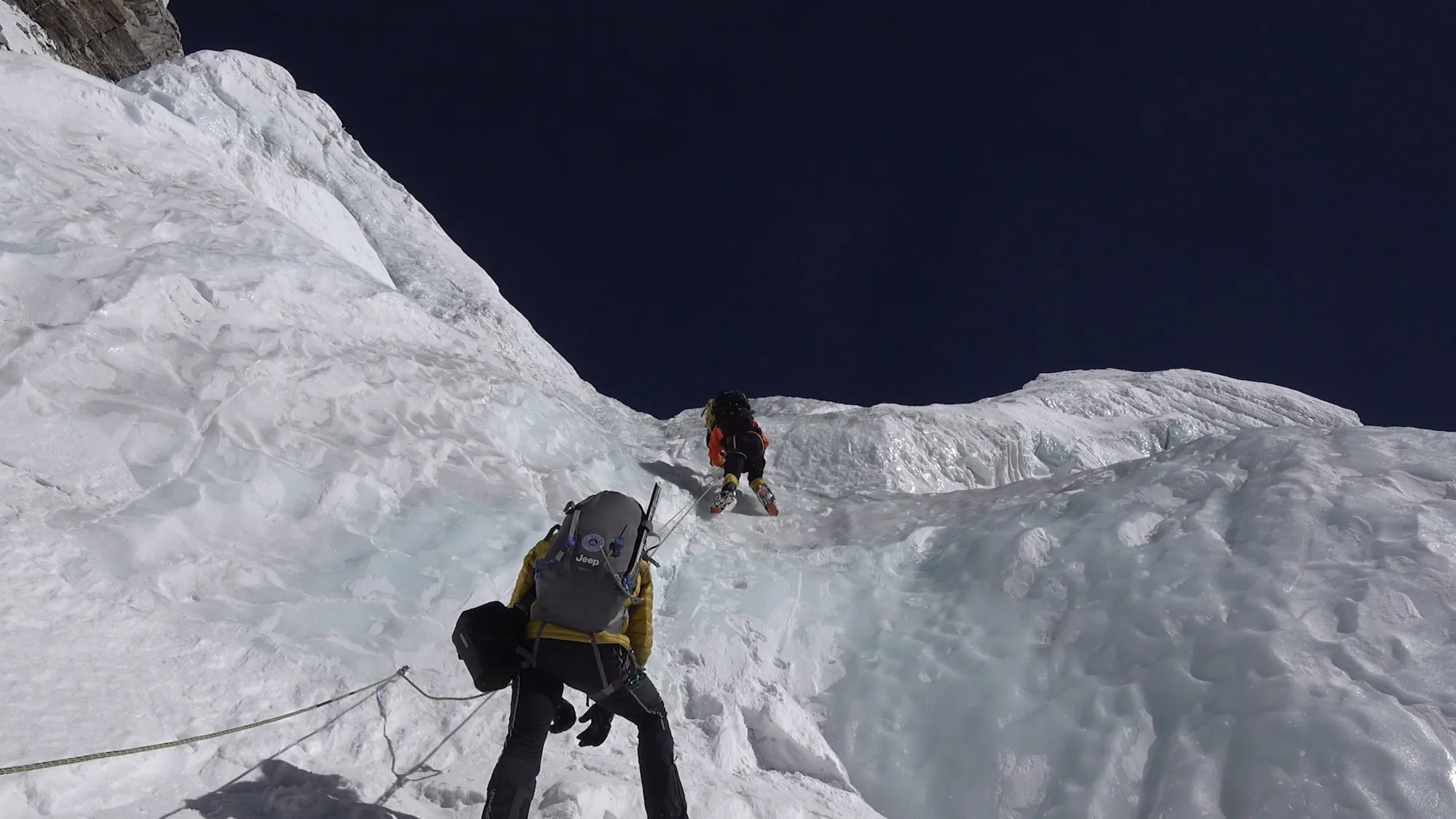
And so we then decided to take the action of getting onto an old piece of rope, which is a dangerous thing to do. And then we climbed up a sheer 25 meters of vertical ice piece in the ice fall with no footsteps in it. Just sheet ice got to the top of it, looked down and she was still in exactly the same position. So she's still down there.
Probably climb one meter in the space of 20 minutes. I'd gone 25 meters with one arm in the timeframe that it took her to do less than one foot. That was when I realized just how incapable and incompetent some of these operators and some of these so-called matinees on this mountain were. I was told by other team members that they'd seen her higher up and they believed that that woman died between Camp 4, the South Col and the South Summit in an area called the balcony.
Now at Camp 2, behind me you can see Lhotse and all the snow in front of it is Lhotse Wall. We're going to try and get ourselves up there when there's not too many people and the weather's good. So my camp 4 now, I never rest. A lot of traffic, a lot of people, Lhotse Wall.
Anyway, here's what it is. South Summit in the morning, all being well. Finding a harder bridge. It's hard work, I've been taking people.
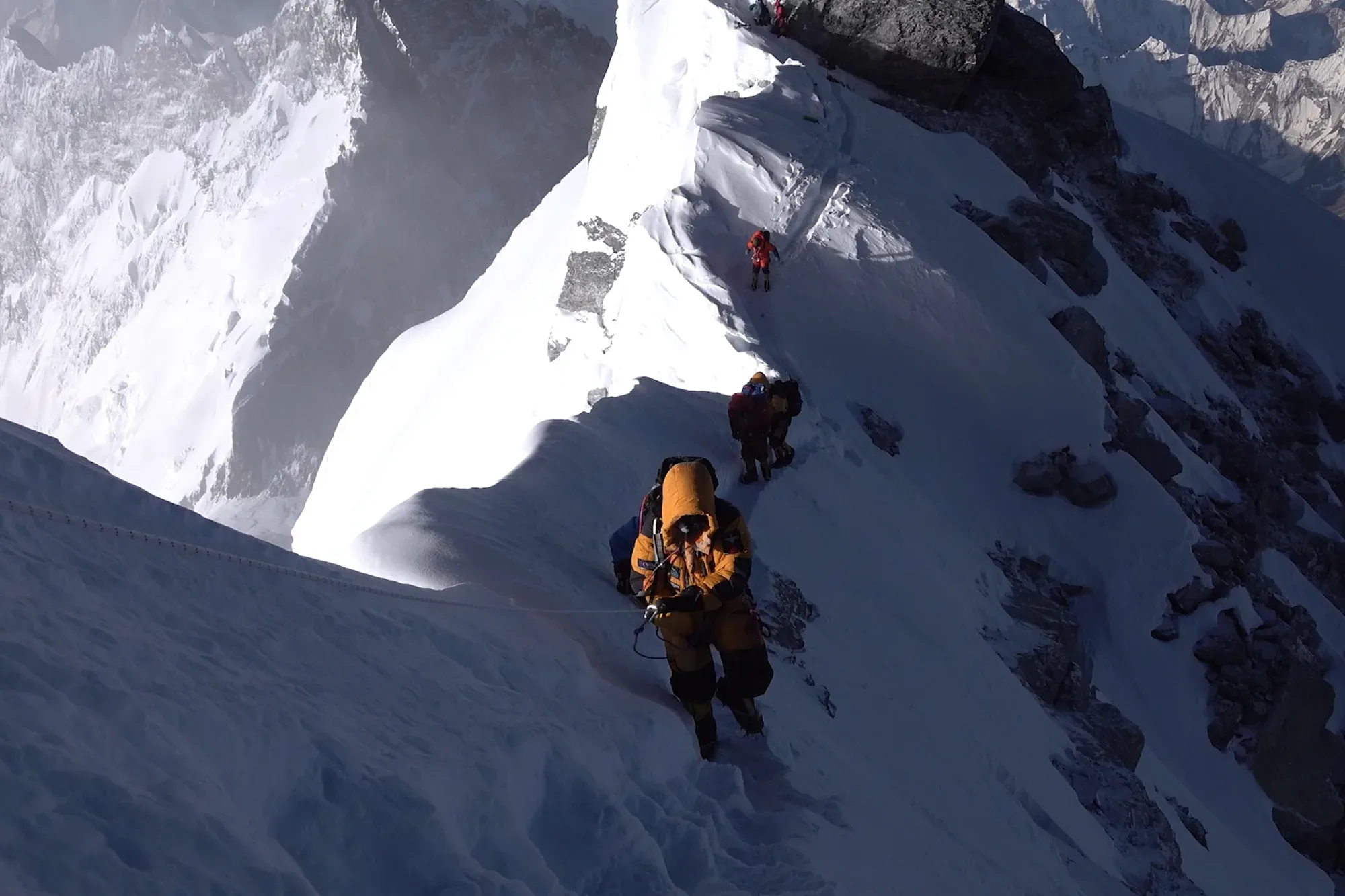
I've got to work hard to pass them. There were multiple occasions when we had to make a decision to come off the safety lines in order to be able to overtake people and continue climbing. There were times we were overtaking 10, 15, 20, up to 30 people at a time in one queue. We attach ourselves to each other on a short line.
Each harness is tied to each other with a bit of rope. But you do that at the knowledge that if one or the other makes a mistake, you've got no safety. You're falling, however many, hundreds or thousands of feet down. In the back of your mind you've only got so much oxygen in your tanks.
You've only got so many hours of daylight before the temperature's going to plummet again the following night. As we made the final approach towards the final summit, the altitude really kind of started hitting me then. And I couldn't walk more than four or five steps without breaking the waist and breathing hard. You can feel the supplementary oxygen mixed with the atmospheric.
It's a feeling of mixed emotions of, come on, let's just get there please. We've done all this work. Let me get and stand on that summit and look around. While simultaneously thinking, I was struggling to even lift a leg up here, let alone take another step.
When we hit the summit, you've got, it's a bit on one side, the pole on the other. And you're on top of the world. I was gutted that Terry wasn't there. He had the ability to be there.
He trained everything I'd done, he'd done. But that is the reality of life with a disability, you know. Some things stop you from doing it, even though mentally and physically, you know you can. Your injury stops it.
But I was glad that I got there for him as well. You know, he was desperate that one of the team got up there, the project made it. Everest was bigger than anyone, one individual on the team, but it was so important for one of us to get up there. You know, Martin's helped me out massively over the years.
I was really so proud of him, proud to see him up there. Now we're talking. These mountains can be enjoyed by all and they should be enjoyed and they should be free to enjoy. However, you've got to respect them.
In the last five years or so, there's been a huge expansion of Nepalese companies, some who I totally support and I work with, and some who I think just should not be here at all. Nepal is a country with lots of rules and regulations, but then in the same token, none. I don't discourage suitably qualified local operators from trying to make a go of an expedition company and that's great, but there's a lot that don't have the experience. There's so many operators here now that there is almost a need for a greater control of the level of people that are coming here.
The mountains are a very, very unique and a very addictive place. You know, you kind of put yourself in that environment and your experience needs you in all of her glory and you want it again. You want to go back. As well as I was leaving, I was thinking...
Would you like a film like this? Start a film project