
Climate Change Forum 2021
CPA UK Forum on Climate Change In Preparation for Glasgow COP26
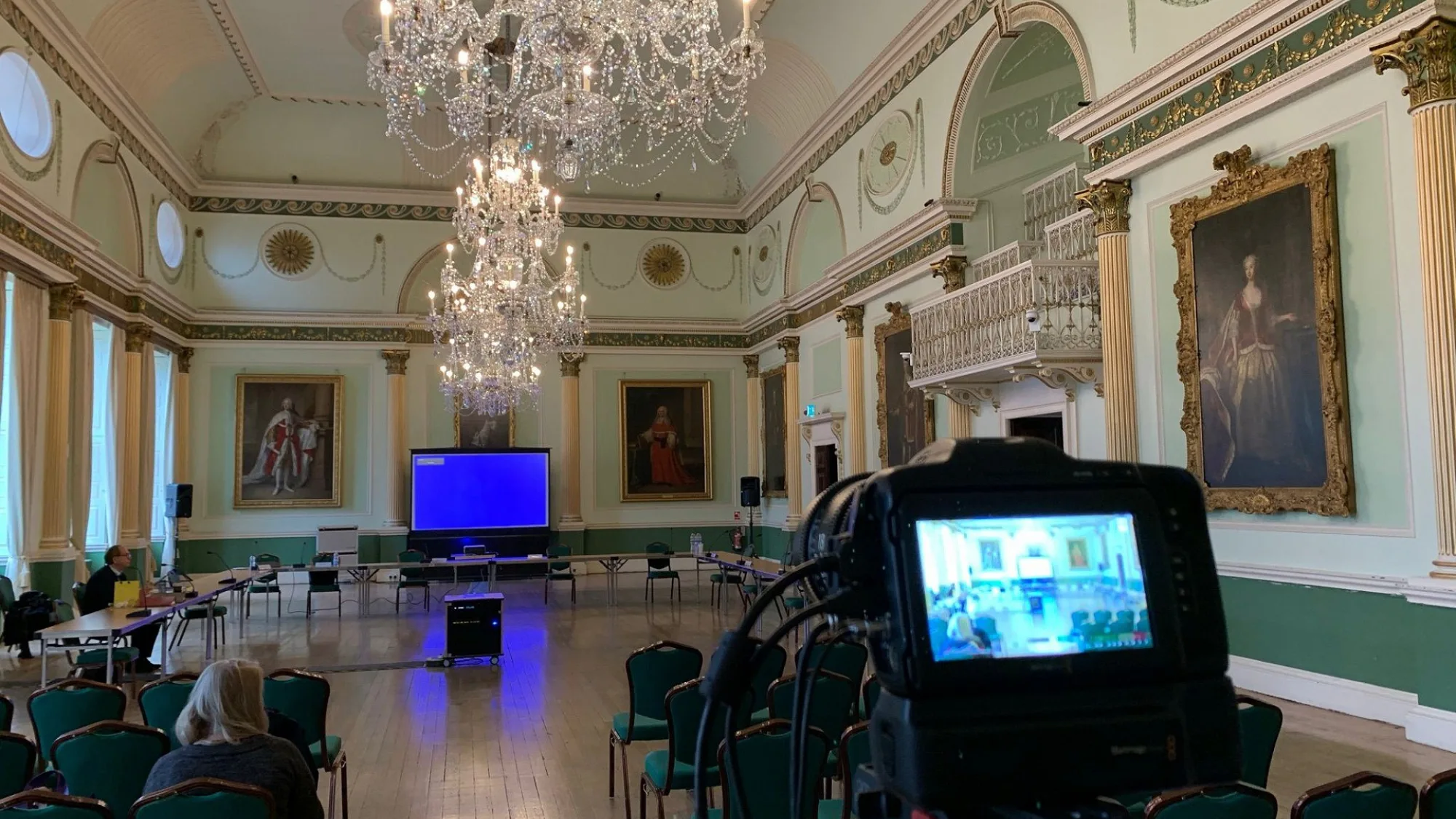
This event for the Commonwealth Parliamentary Association UK, in preparation for COP26, required sophisticated planning, design, and delivery to produce a high-end climate change forum with global significance.
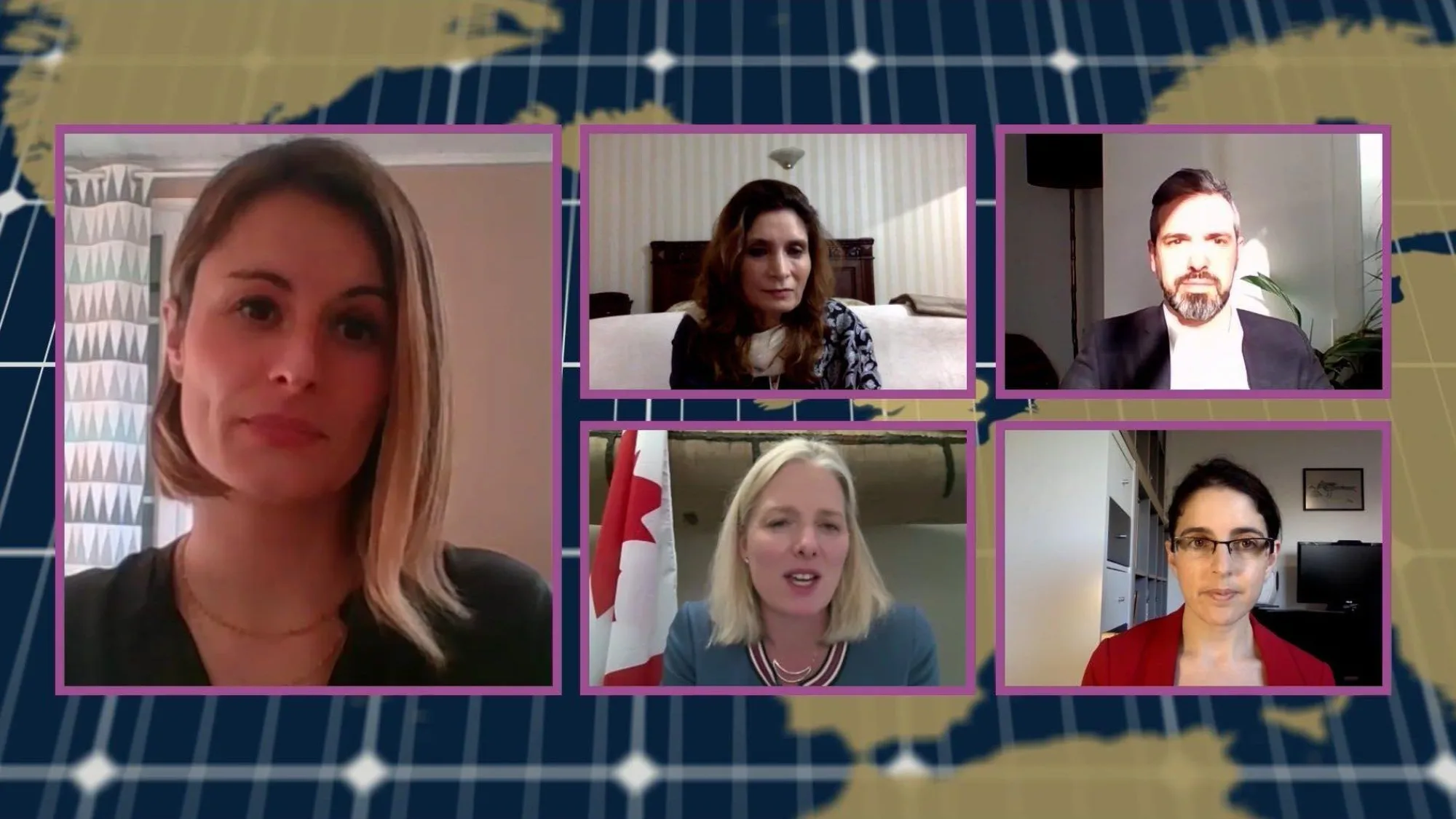
With keynotes and panels from over 30 international parliamentarians, pre-recorded by us, the event spanned 3 days and included 12 live and interactive sessions which brought together leading thinkers and legislators to share their responses to climate change challenges and learn from each other.
Floating Harbour worked closely with CPA UK to understand key objectives in order to conceptualize and design themed graphical interfaces, animated backgrounds, and motion graphic transitions.
Although brought about by the necessity of the pandemic, it was appropriate that for a climate change forum both delegates and contributors were able to fully participate without the need for international travel, whilst still benefiting from a high-quality experience with effective results.
“It was a pleasure to work with Floating Harbour, a creative, reliable and dedicated team. They were able to translate our vision into fantastic graphics for our virtual Commonwealth Parliamentary Forum on Climate Change. We learnt a lot from the team about virtual production and want to thank them for how thorough they were. The production of the Forum was seamless, many delegates were impressed by the professional look and execution. Speakers at the event found the process very straightforward and easy thanks to the rehearsals and the pre-recording led by the team."




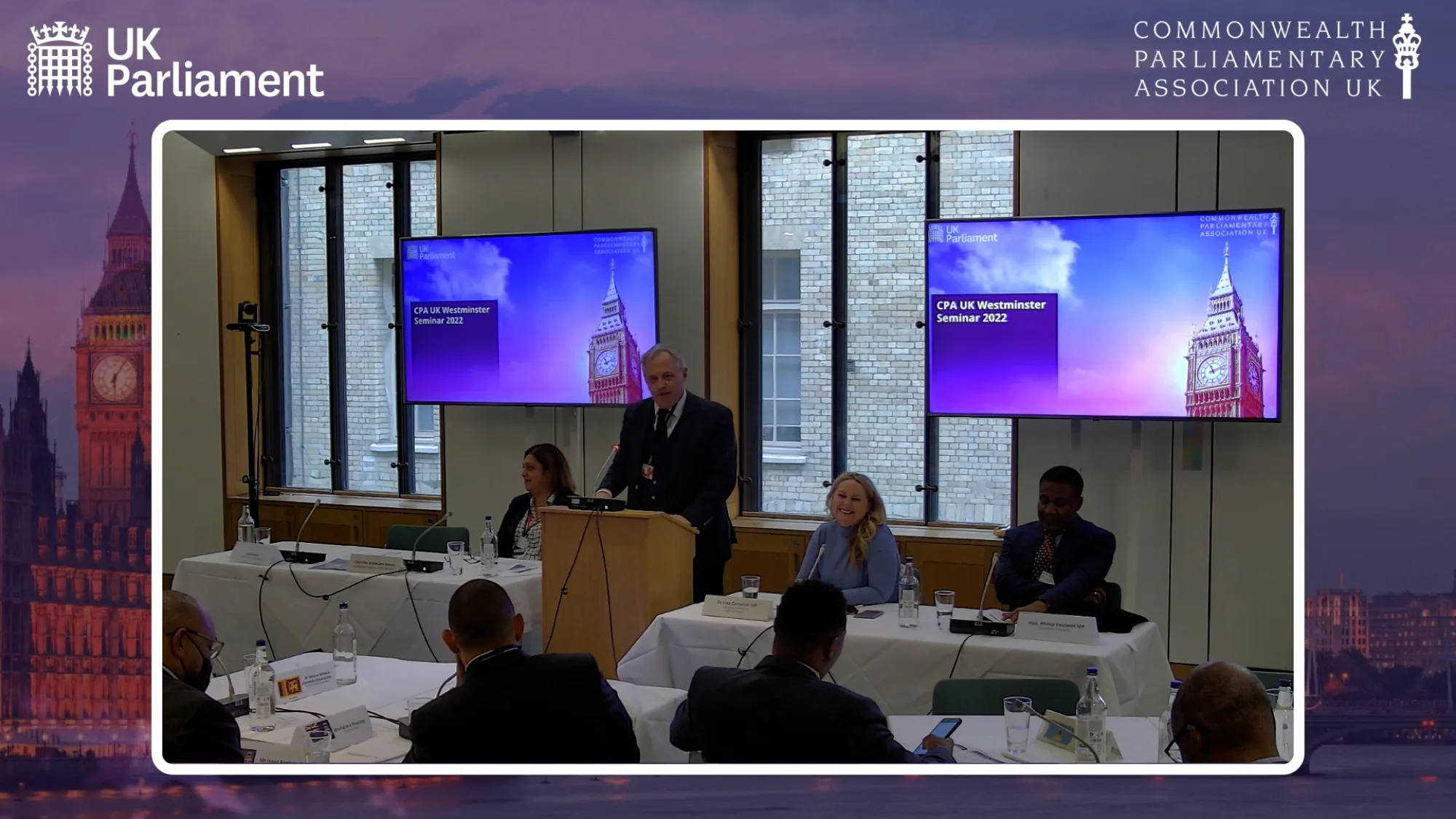
This film is part of our live streaming and event production and animation and motion graphics work. See all the films we make.
Read the transcripts
Raising Ambitions Taster
Post Hurricane Irma Maria, 80% of all homes were either damaged or completely destroyed. 90% of all boats in the village of Lawrence were either damaged or completely destroyed. And so the impact of climate change on our economies are unspeakable. We see ourselves as having a responsibility to act on our climate emergency.
We were one of the birthplaces of industrial revolution with coal and steel and industry forming the basis of our economy. We've got to the point where people are persuaded that we need to act and that we do have a climate emergency. The fact that we've already set a target has sent a major signal to the industry and that's why we've had the recent announcements from companies like Volvo and Ford that they will also cease the manufacture of all internal combustion vehicles. If we can heighten that ambition then surely all of those manufacturers will follow and we can get a fully zero vehicle industry.
There's some fresh thinking happening in Scotland at the moment and I think there's a huge appetite for change amongst our council leaders and if our government can work with our councils to share best practice hopefully in the next decade we will see some big radical changes in Scotland. We can take all of these things that we've done in the UK, bring them to Glasgow and put them on the table. We are not going to be you know involved in the discussions of our emissions and emission targets but we are going to be on the receiving end of all the destruction that takes place. So if I leave nothing with you in this discussion it is to say that it is important for those of us on the receiving end to have a voice.
And a really powerful reminder to all of us of the consequences of climate change that are happening already and the reason why we must all raise our ambition and we must all work harder because we're all in this together.
Environmental Democracy Taster
So Inuit and Canada have done the least to contribute to climate change and they're the most impacted. If you recognize the problem that vulnerable people, marginalized people are disproportionately impacted, that you design policies that will support them but are designed with them, you'll get the outcomes that will make a real difference. Involve the public. So we did a public hearing, a public engagement and there was a huge green day celebrated, green revolution celebrated, planetary celebrated all across the country.
The UN Framework Convention on Climate Change, through its Article VI, recognized the importance of engaging the citizens in climate decision making as a big part of the solution. The rise of the so-called Empowerment Agenda blew fresh air into the UNFCCC process. So for Climate Assembly UK specifically, that involved 108 members of the public aged 16 years and over who were representative of the UK population in terms of age, gender, ethnicity, educational level, where in the UK they live and whether they live in an urban or rural area. One of the biggest impacts we've seen has been on stakeholders.
The government itself has said it's using the Assembly's recommendations to inform its upcoming net zero strategy. So the citizens' Assembly is arguably a big step forward in terms of inclusivity. The World Programme on Action for Climate Empowerment, also known as ACE, was adopted in Doha in 2012 and it expired last year. The adoption of this World Programme was a watershed moment because it acknowledged explicitly the critical role of actors beyond central authorities.
So in our part and I think every part of the world, parents are very important. So we started celebrating that every household will plant a tree for their parents which will outlive the parents, outlive them and their names will be written on it in every house. And that really rang a bell in every heart. We worked very hard to get the Gender Action Plan because women bring a different perspective, often as mothers, as grannies, as aunties.
Beyond the Conventional: Climate Justice & Security Taster
Climate justice in itself recognises humanity's responsibility for the impacts of climate change and secondly, it addresses the burgeoning climate inequality gap. The injustice and the unfairness is that through no fault of their own, these countries have contributed the least in terms of carbon emissions, but are paying a heavy price. The current projections is that up to 1.2 billion people are at risk of displacement by 2050.
The imperative of a just transition is that governments design policies in a way that ensures the benefits of climate change action are shared widely, while the costs do not unfairly burden those least able to pay. There are questions about energy poverty because in a climate like Scotland's, people on low incomes can spend very high proportions of their income just keeping their homes warm, so this is incredibly important. So if we invest in improving the quality of people's homes, there's the potential to create thousands of jobs, thousands and thousands of jobs here in the UK. It will help us to meet our carbon emissions targets, it will help us to regenerate communities, it will help us to take those poorest people out of fuel poverty.
This framework rests on four pillars, procedural justice, distributive justice, intergenerational justice and restorative justice, and collectively these four pillars address these issues, voice, participation, representation and reparation, inclusivity, the voices of discontent. We solve one problem and often cause others, which is why our whole governance framework needs to be based around holistic solutions which deliver a wide range of wellbeing benefits whilst also protecting the interests of future generations. The cobalt that's used to produce the batteries that generate the power to drive these vehicles are dug in countries such as the Democratic Republic of Congo and they are being mined by child labourers. It's about people and making sure that they own the transition and it is not something that's done to people so they're fully part of it.
And it's all about governments screening all of its climate policies to make sure that they have equity, fairness, justice built into them right from the beginning.
Acting on Climate Change Taster
Climate change is the crisis of our age and we will be judged by future generations on how we respond to it. The issues of climate is still not yet at number one course. You are talking about reducing poverty and you don't focus on climate, then there's a problem. As I started my career in politics two years ago, I was given the opportunity by CPA to study parliamentary governance at McGill University.
Which I integrated into my established processes. This process I'm honored to share with you today. So the Select Committee we have an open inquiry on COP26 and HET0 where we take evidence from stakeholders to try to fill in some of the gaps as we identify them and make recommendations to ministers about how they can improve their delivery plans. We've also decided to work across select committees in the House of Commons to set up a monthly Q&A on COP for select committees.
Because whilst my committee has been leading the school meeting, lots of other committees have their own interests in the context of COP and how that links to our domestic delivery plans. The power of poverty, the power of wits is less in upper chambers. Which is why I think that upper chambers can be extremely helpful in this area. Trying to get a climate lens on every policy, every piece of legislation.
What do you think would be a strategy to have parliamentary support of serious climate change ambitions when the democratic system is compromised, especially in developing countries? The strategy is, are we able to make this a co-ident of the developing countries, whether they are democratic or not? We have to make it a serious agenda that in terms of their core priorities, you are talking about fighting poverty, you are talking about universal health cover, you are talking about industrialization, you are talking about housing, you are talking about some of all this. How can all this be linked to the issue of climate change?
And beyond that, it gets to be escalated downwards. Let it not be at the national level. Any other strategy that we are talking about, if it is at the national level, priorities keep changing, things keep shifting. But if it is made to be understood at the very lowest levels, where the communities are and the communities get on some of the things, in my view, things are likely to change.
Would you like a film like this? Start a film project