
Power Stations
Power Station hire
Portable power station hire in Bristol
A power station is a large rechargeable battery with mains sockets on the front. It runs the same equipment a wall socket would, silently and without fumes, anywhere there is no mains supply, or none within reach of where you are working. On a shoot that means lighting, cameras and monitors with nothing bleeding into the sound recording. At an event or a market it means a stall, a stand or a PA running all day without an engine behind it.
We hire from 500Wh, enough for a laptop, a camera and phones through a day, up to 10,240Wh across two linked units with expansion batteries, which will run a full lighting setup on location. Every one leaves us fully charged on green energy, and wherever possible it is charged directly from our own solar panels.
-
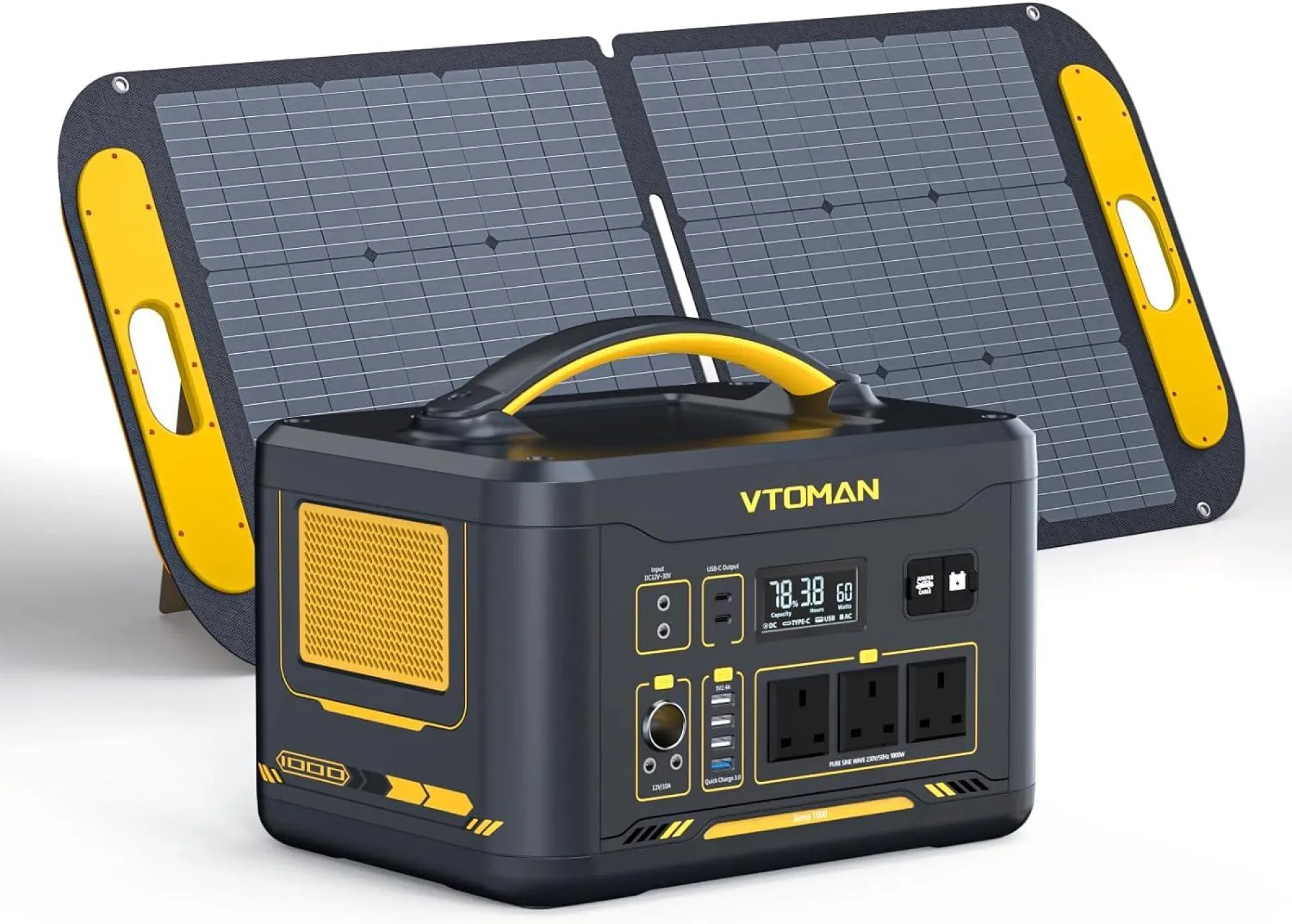
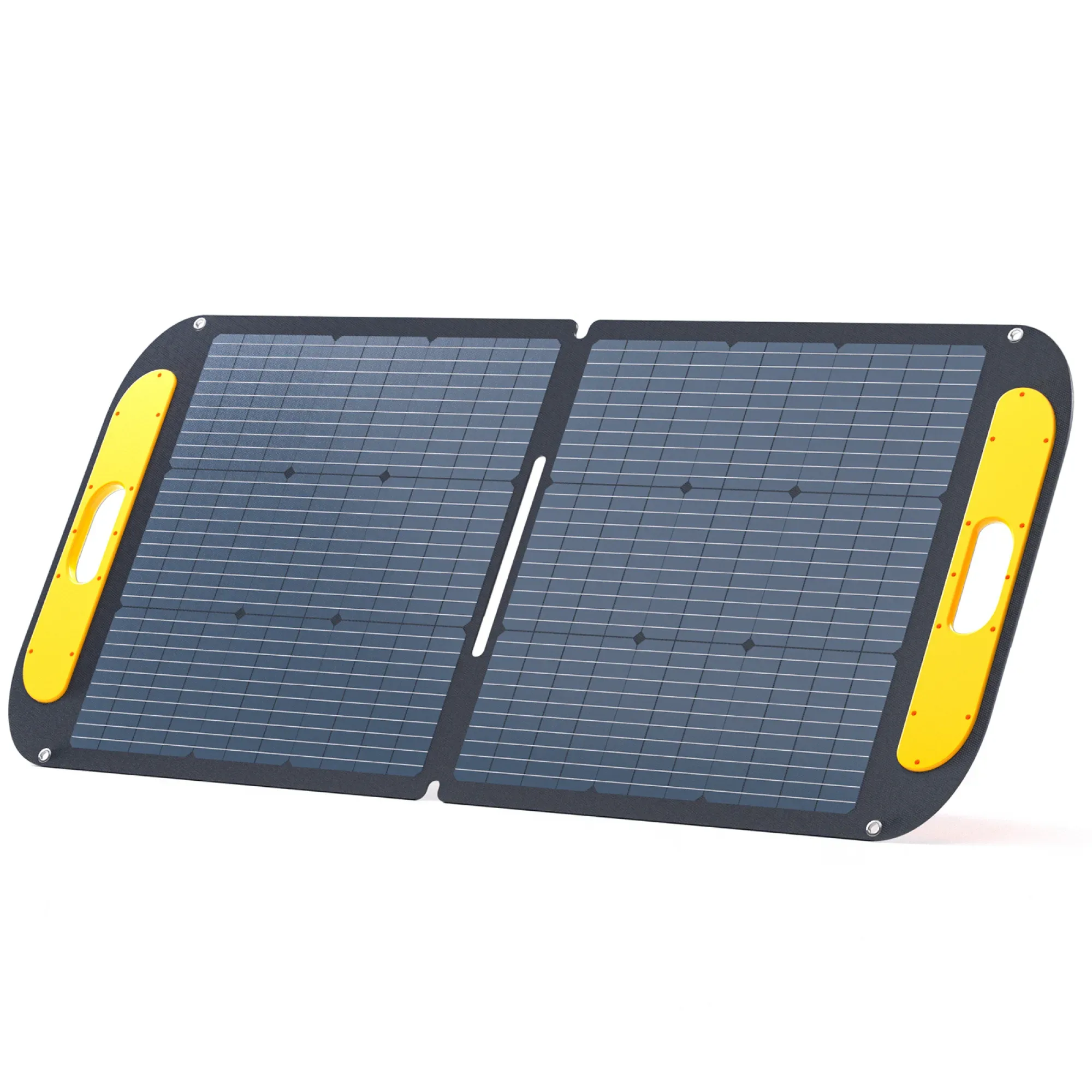
VTOMAN VS110 solar panel
A folding panel for topping up a station on a long job with no mains
£12 a day, £48 a week (ex VAT)
-
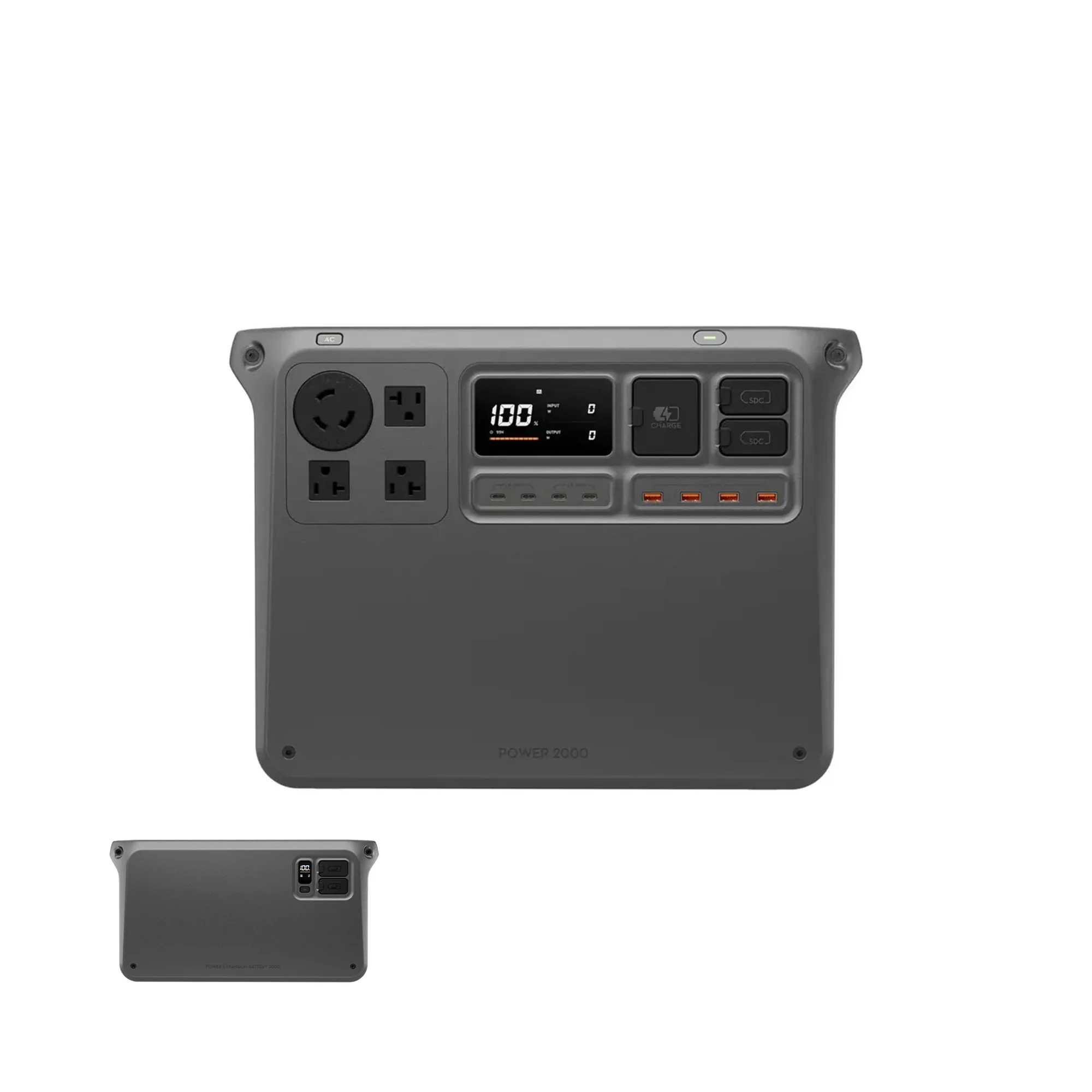
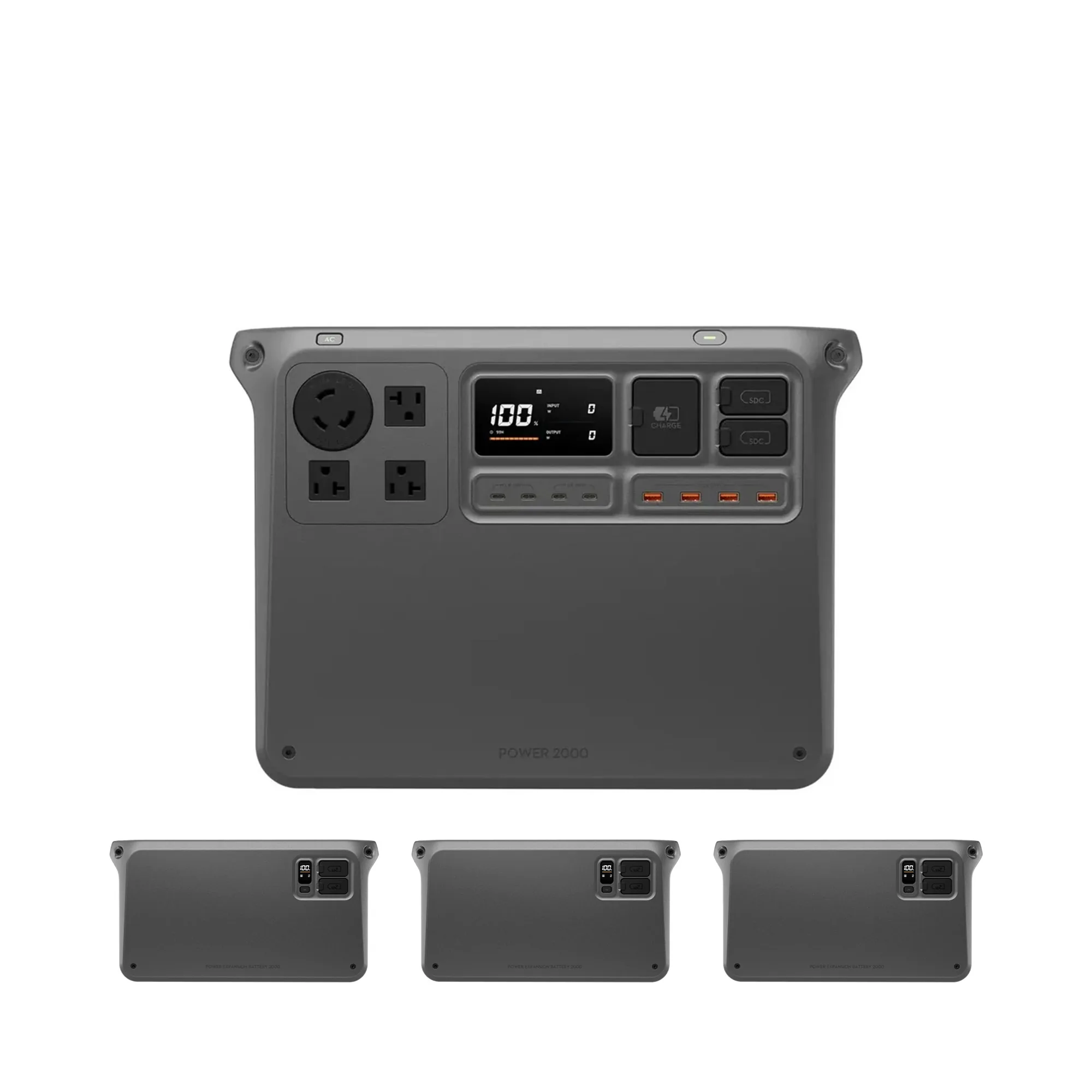
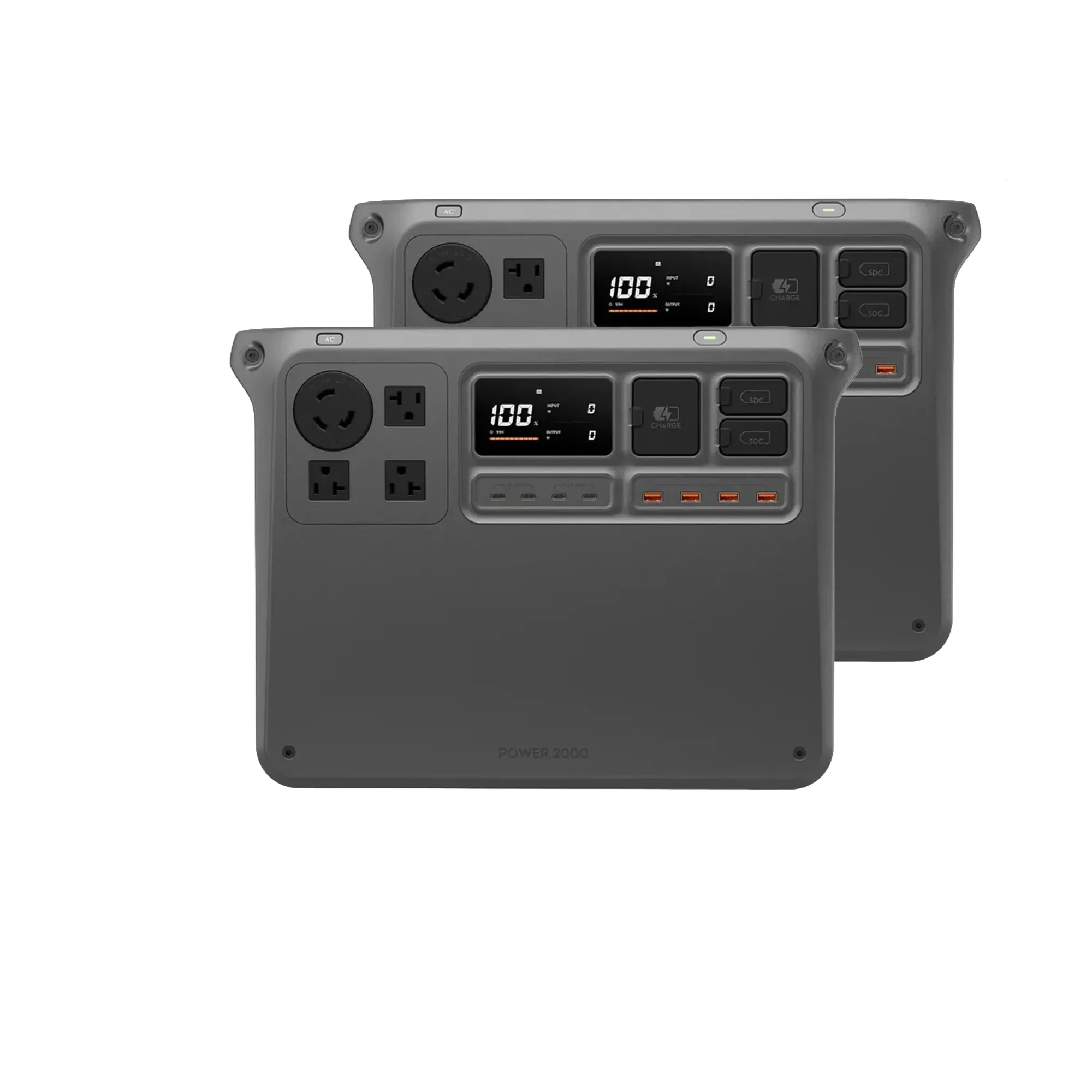
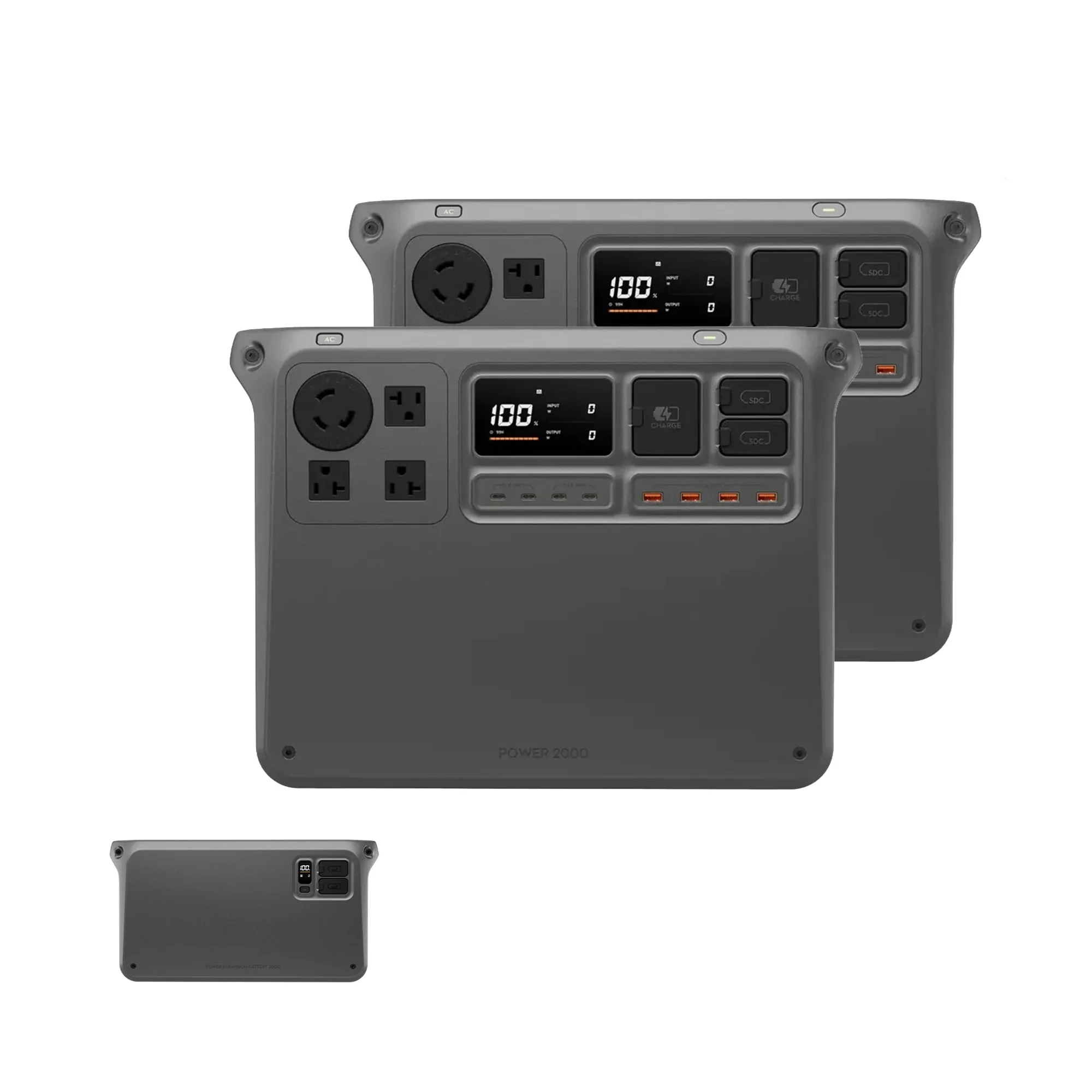
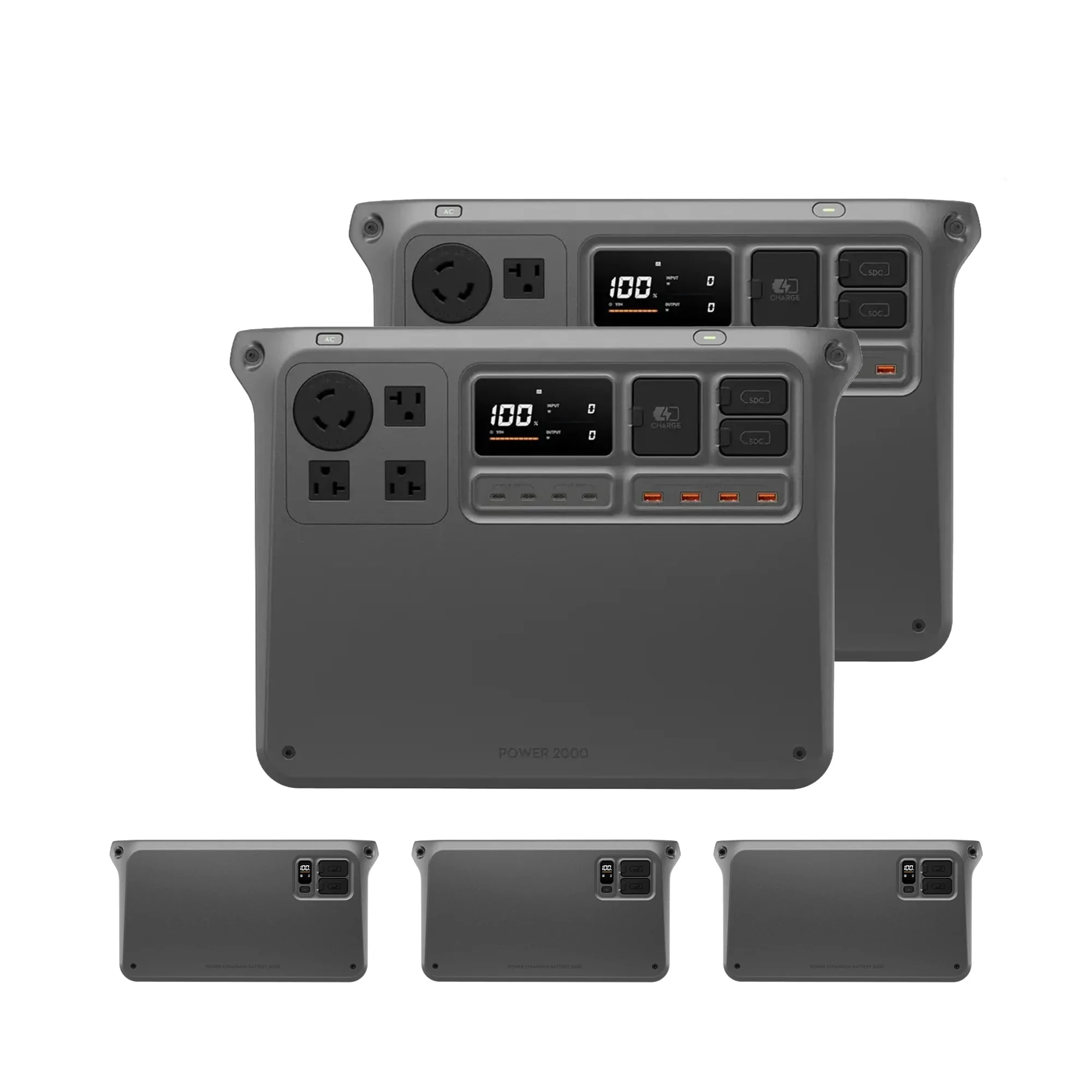
2x DJI Power 2000 + 1 expansion
6,144Wh, 3,000W output per unit, 8 plugs
£220 a day, £640 a week (ex VAT)
-
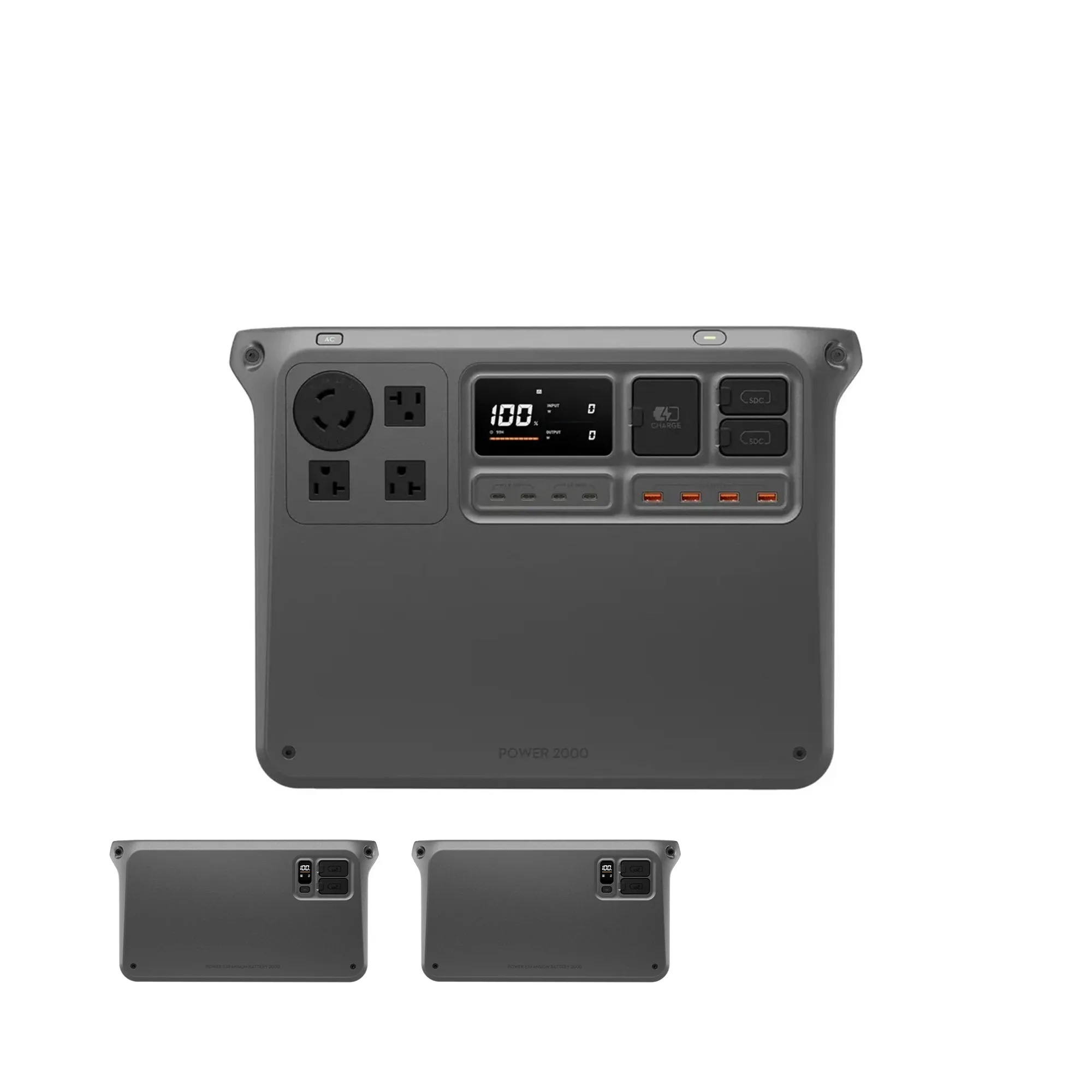
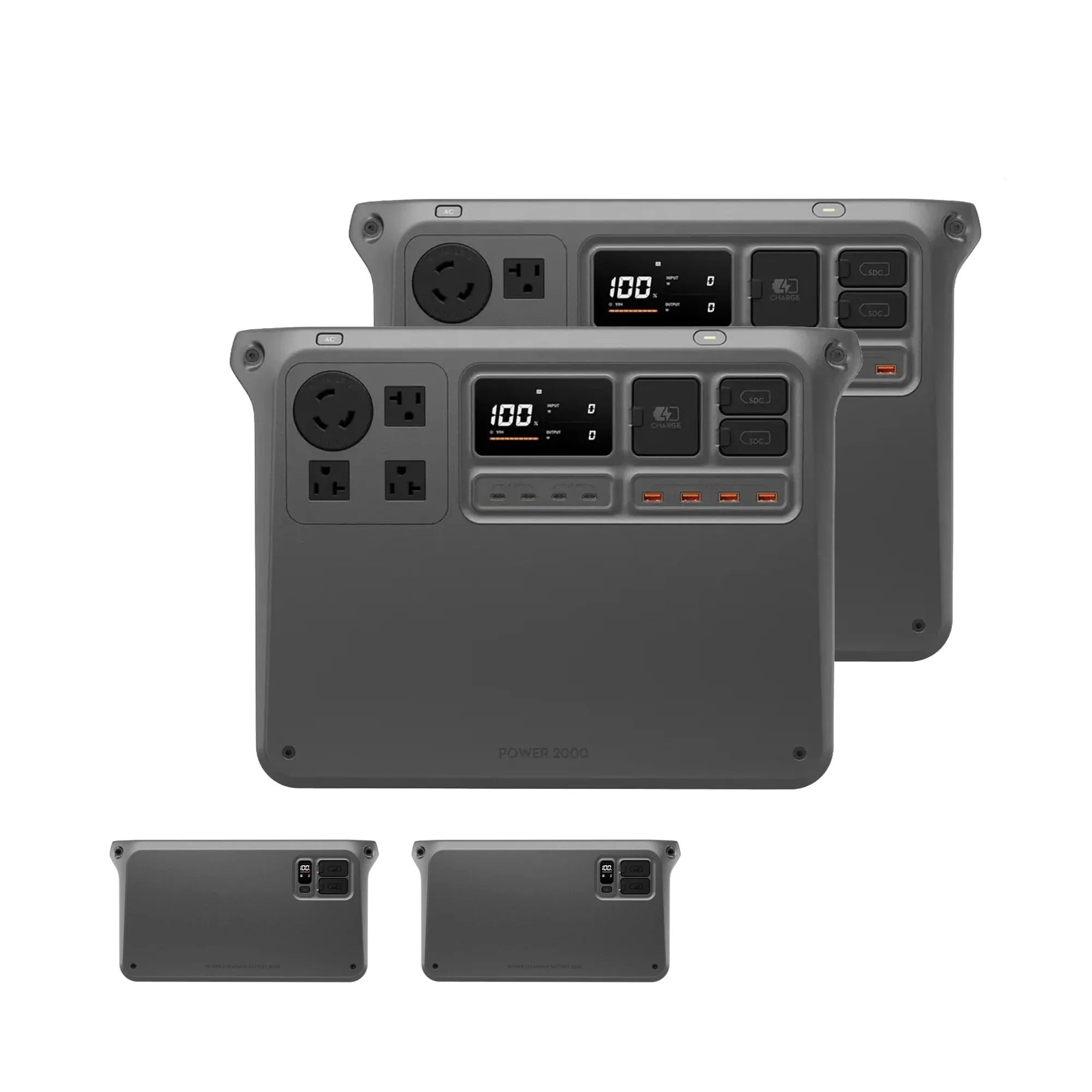
2x DJI Power 2000 + 2 expansion
8,192Wh, 3,000W output per unit, 8 plugs
£290 a day, £710 a week (ex VAT)
-
2x DJI Power 2000 + 3 expansion
10,240Wh, 3,000W output per unit, 8 plugs
£360 a day, £780 a week (ex VAT)
Tell us about the job and we will pick the station
Two questions. The answer appears underneath and changes as you change your answers.
Answer the two questions above and the options appear here. If nothing appears, the comparison table further down the page covers the whole range, or you can call the office on 0117 929 3679.
If something on the job cannot be interrupted, a livestream, comms or a one-take shot, tell us when you call and we will build in the redundancy. Running two stations across a set is often the better answer in any case, because one running out does not take the whole setup with it.
The stations side by side
The figures for each station, from the manufacturers and from the units themselves. Expansion batteries add capacity to a DJI Power 2000 without changing its output or its sockets.
| Station | Capacity | Continuous output | Surge | Mains sockets | USB | Weight | Charge time | Max solar input |
|---|---|---|---|---|---|---|---|---|
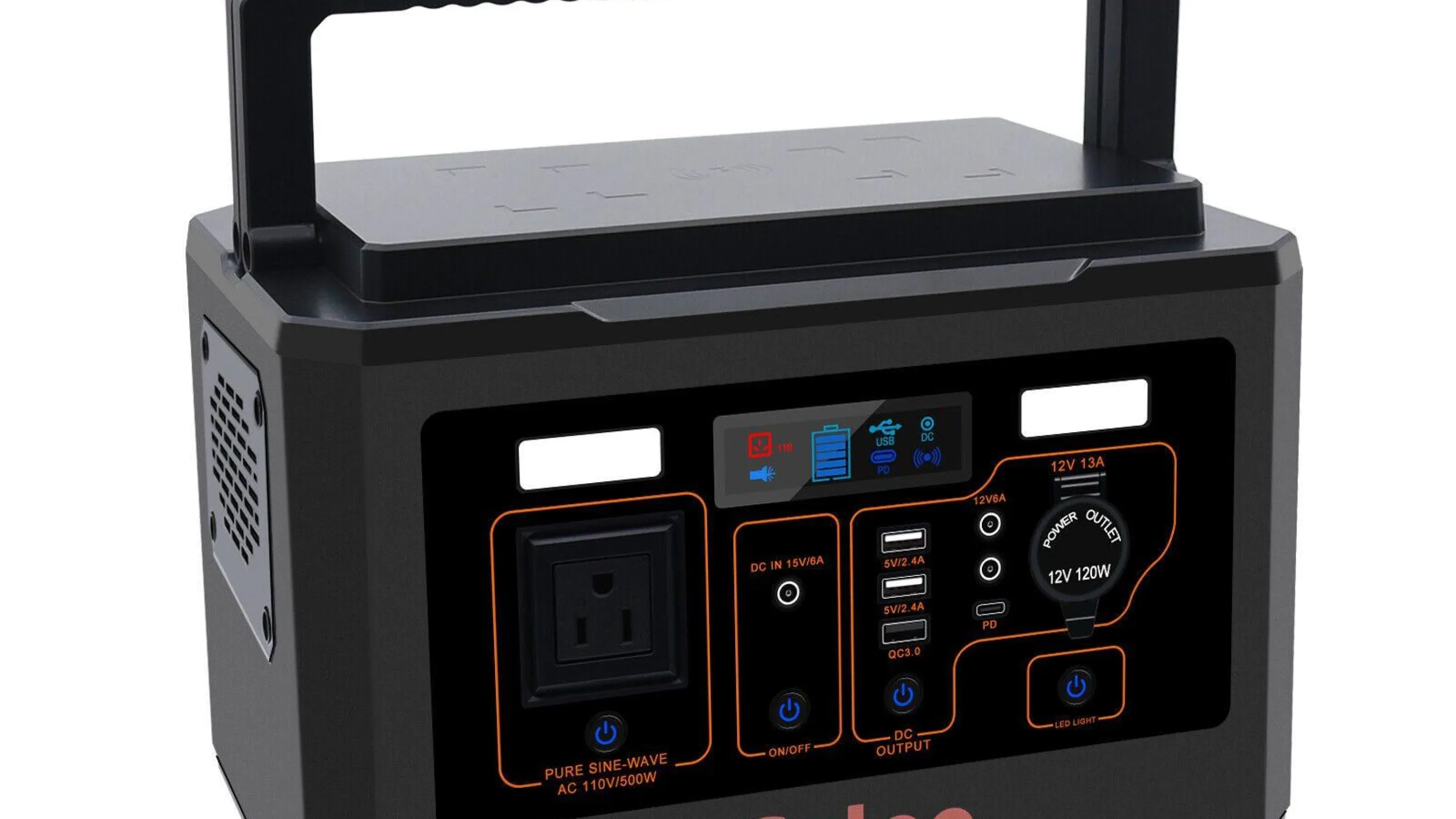
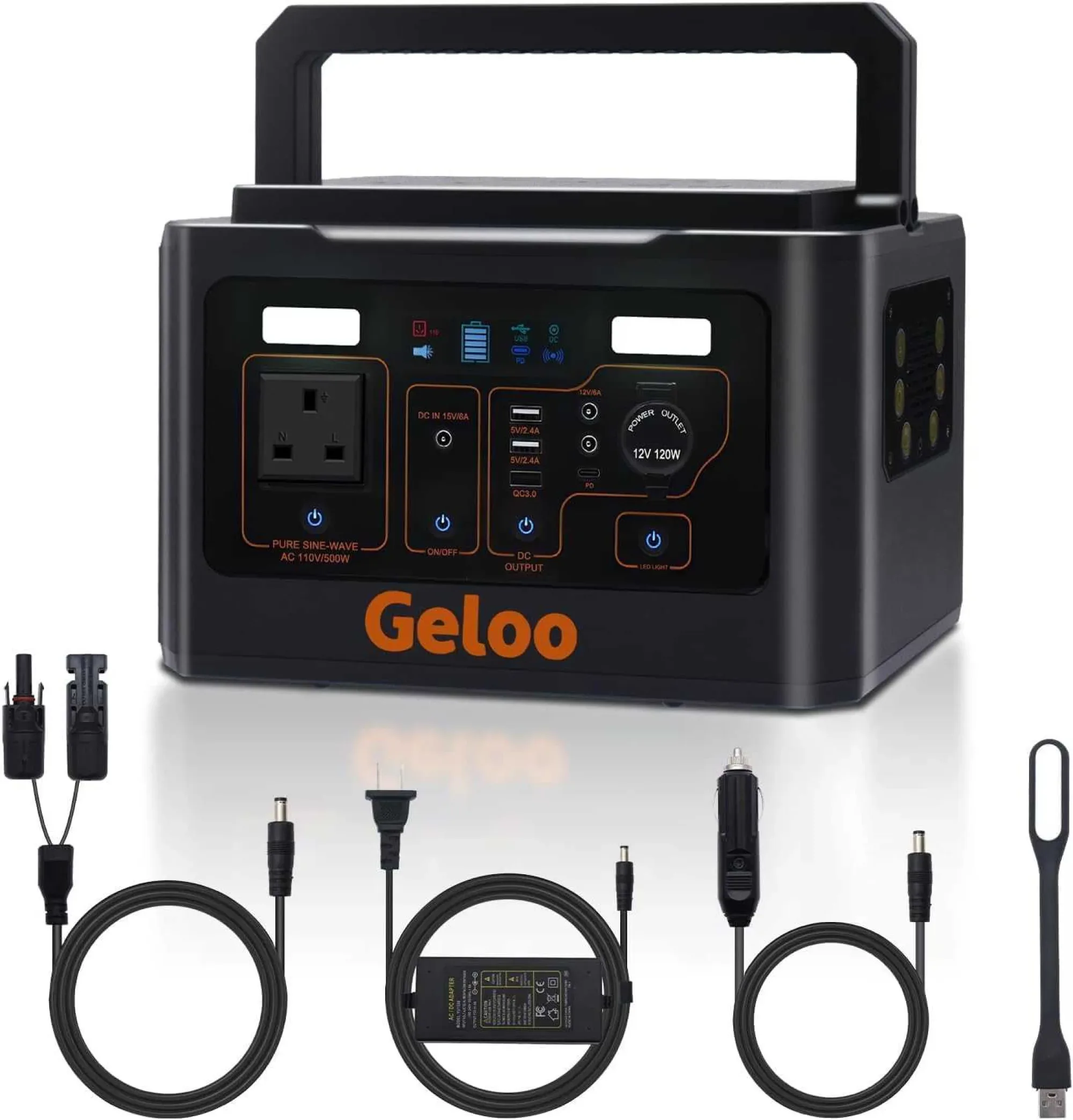
| Geloo 500W | 499.5Wh | 500W | 2 | 1 USB-A at QC3.0 (5V/3A, 9V/2A, 12V/1.5A), 1 USB-A at 5V/2A and 1 USB-C at 25W PD | 8.8kg | 90W | ||
| VTOMAN Jump 1000 | 1,408Wh | 1,000W | 2,000W | 4 USB-A and 2 USB-C | About 8 to 9 hours | 200W | ||
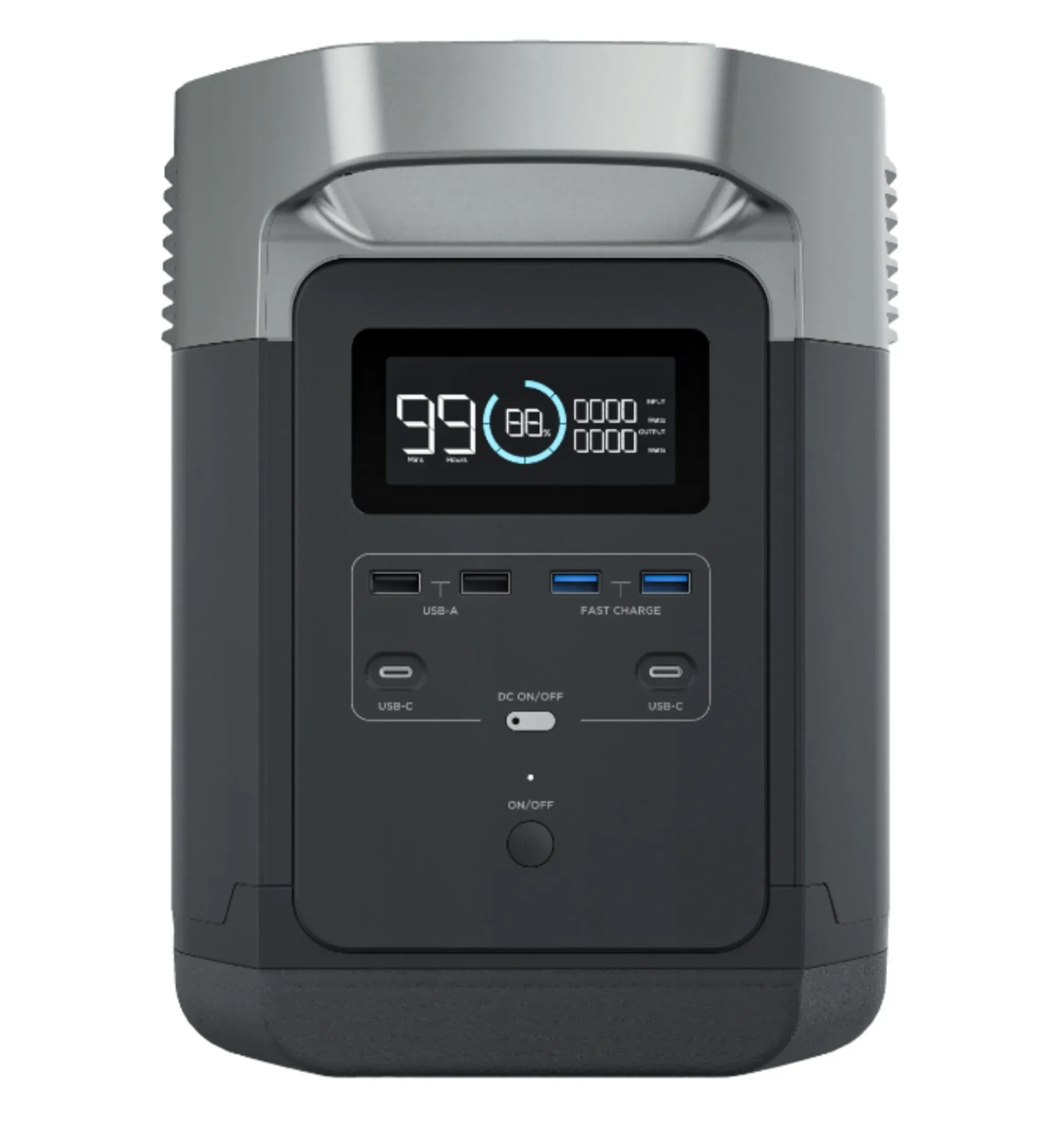
| EcoFlow DELTA | 1,260Wh | 1,800W | 3,300W | 4 | 4 USB-A and 2 USB-C at 60W | 14kg | About 90 minutes | 400W |
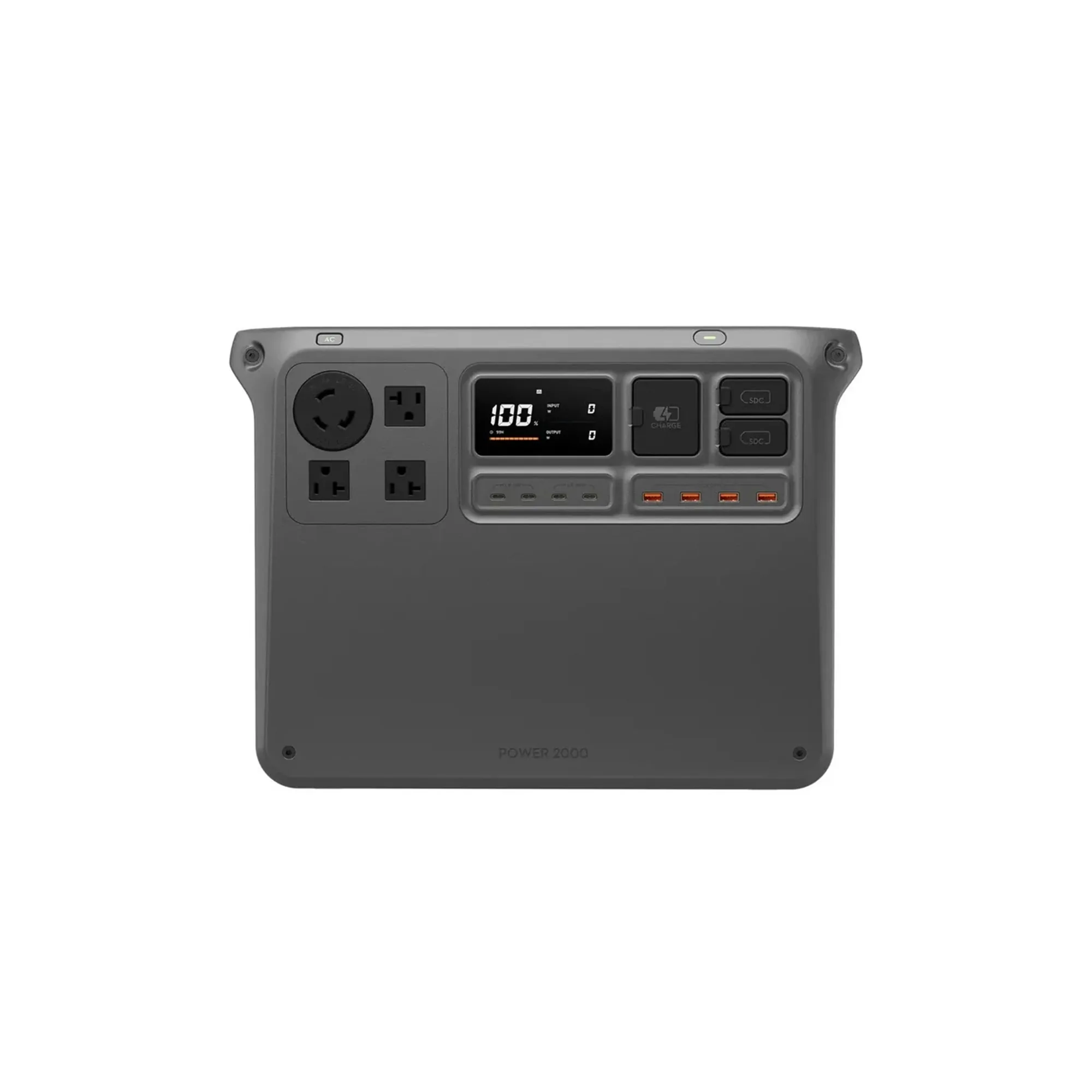
| DJI Power 2000 | 2,048Wh | 3,000W | 4 | 4 USB-A at 24W and 4 USB-C (two at 140W, two at 65W) | 22kg | 0 to 80 per cent in 45 minutes | 400W |
A blank figure is one we have not yet confirmed against the unit in store, so we have left it out rather than borrow a figure from another model. Call the office on 0117 929 3679 and we will check it for you.
Questions we are asked about power station hire
How much power am I going to need?
Power stations are measured in two ways. Watts are how much you can draw at once, and watt-hours are how much there is in total. A light drawing 200W will run for roughly five hours on a 1,000Wh station. Add a laptop and a monitor alongside it and you are drawing 350W, so the same station lasts under three hours.
Take a rough figure for everything running at the same time, not everything you are bringing. Most camera kit, laptops, monitors and phone chargers are modest, in the tens of watts. LED lighting is where the figure climbs, and anything that heats or has a motor is higher again by a wide margin.
Our range runs from 500Wh, which will keep phones, cameras and a laptop going through a day, up to 10,240Wh across two linked units with expansion batteries, which will run a full lighting setup for a day on location. Answer the two questions further up the page and we will make the selection for you. If you would rather work from your own figure, the “not sure, add it up” panel in the first question totals what you are bringing and turns it into a runtime for every station we hire.
If you are not sure, call the office on 0117 929 3679 and describe the job. We size these every week and it is a short conversation.
How long will it run for?
As a guide, divide the station's watt-hours by the watts you are drawing, then take off about 15 per cent for the losses in converting battery power to mains power. A 2,048Wh station running 300W of kit gives close to six hours rather than the seven the raw figure suggests.
Two things extend that considerably. Recharging overnight at base doubles or triples what a single station covers across a multi-day job. Adding an expansion battery raises the capacity without changing anything else about how it works.
Can I run a kettle, urn, fridge or heater?
On the larger stations, yes. On the smaller ones, no, and this is the case to call us about rather than work out from the numbers.
Kettles, urns, heaters, coffee machines and anything with a compressor or a motor draw far more than their size suggests, and they draw it in a sudden spike at the moment they switch on. A kettle pulls around 2,000W to 3,000W as it starts. That will shut down most portable power stations immediately, even with plenty of capacity remaining, because the limit is the output rating rather than the battery.
If catering, heating or a fridge is part of your job, call the office on 0117 929 3679 and we will work out what covers it. The figures on this page are for steady draw rather than start-up spikes, so they will not account for these.
Can I use one indoors?
Yes. A power station is a battery, so there are no fumes and nothing to vent. It can sit in the room with you, which is why they have largely replaced small generators for interior work.
They should not be enclosed in a flight case or cupboard while in use, as they need air around them to stay cool. Beyond that there is nothing to plan around.
Are they silent?
Almost. There is no engine, so nothing runs continuously. Under a light load the station makes no sound at all. Under heavy load, or while charging at speed, a cooling fan comes on, and on the larger units that is audible in a quiet room. On a dialogue take, positioned outside the shot or a few metres away, it will not reach the microphone. The DJI units can also be set to charge slowly, which keeps the fan off overnight.
How heavy are they, and will I need a van?
No. Every power station we hire can be carried by one or two people and moved in an ordinary car. None of them requires a van, a tail lift or a trailer.
The EcoFlow DELTA is around 14kg, comparable to a full camera case. The DJI Power 2000 is around 22kg, which is a two-handed lift for most people and fits in a car boot. Each expansion battery is a separate unit of around 16.5kg rather than a single heavier one, so a large configuration travels as several manageable cases rather than one that needs equipment to shift.
The largest setup we hire, two DJI Power 2000 units with three expansion batteries, comes to around 93.5kg in total across five separate cases. That will go in an estate car or a small van, and two people can load it.
Weights for every unit are in the comparison table above.
Can I run it off solar?
You can, and we hire the panels for it. What a panel returns depends heavily on the season. A 100W panel in good summer sun will put back a few hundred watt-hours across a day. Under winter cloud it will manage a fraction of that.
Solar suits long, remote jobs with no mains access at all, where a station has to stretch across several days. For a single day's filming, or anywhere with a socket at base, a larger station or an expansion battery is the simpler answer.
Are they a low-carbon option?
Yes. Every battery leaves us fully charged on green energy, and wherever possible it is charged directly from our own solar panels. There are no fumes and no fuel to handle on site, and nothing is burned while you are using it, so the only emissions attached to the hire are those of getting it to you and back.
If your production is reporting through albert's carbon calculator, battery power on location is the direction albert's SPARK roadmap sets for temporary power by 2030, replacing standalone diesel generators.
Power station or petrol generator?
For filming, events and location work, a power station in almost all cases. It is silent, so it does not carry into your sound recording. It produces no fumes, so it can sit in the room rather than outside on a cable run. There is no fuel to store, transport or handle, and no emissions in use.
A petrol generator holds an advantage in one situation: very high continuous draw over several days with no mains access anywhere. That accounts for a small minority of jobs. Under albert's SPARK roadmap, standalone fossil fuel generators are to be phased out of UK film and television production before 2030, with grid power and battery systems taking their place.
What if I need more than the biggest one?
The largest configuration we hire as standard is two DJI Power 2000 units with three expansion batteries, giving 10,240Wh in total. For anything beyond that, or where several separate circuits need running at once across a site, call the office on 0117 929 3679.
Running two or more stations across different parts of a set is often the better answer in any case, well below that ceiling. It keeps cable runs short, and a single unit running out does not take the whole setup with it. If you have something that cannot be interrupted, tell us when you call and we will build in the redundancy.
Can I hire one for longer than a week?
Yes. Day and weekly rates are shown on each option, and anything beyond three weeks is priced on application. Call the office on 0117 929 3679 or email admin@floatingharbour.co.uk with the dates.
What if my job needs more than battery hire can cover?
Bristol has a clean power scheme for exactly this. The West of England Mobile Power Hub, run by the West of England Mayoral Combined Authority with Bristol City Council, ACT1.5 and Power Logistics, supplies renewable power to productions and events across the region, with a charging hub at The Bottle Yard Studios. It has powered BBC and streaming productions, Forwards Festival and the Bristol International Balloon Fiesta.
Bristol Film Office keeps the current details, along with grid connection options on location. If your job is beyond what battery hire covers, call the office on 0117 929 3679 and we will tell you who to speak to.