

ZeroAvia Technology Deep Dive: ZA600 Fuel Cell Power Generation
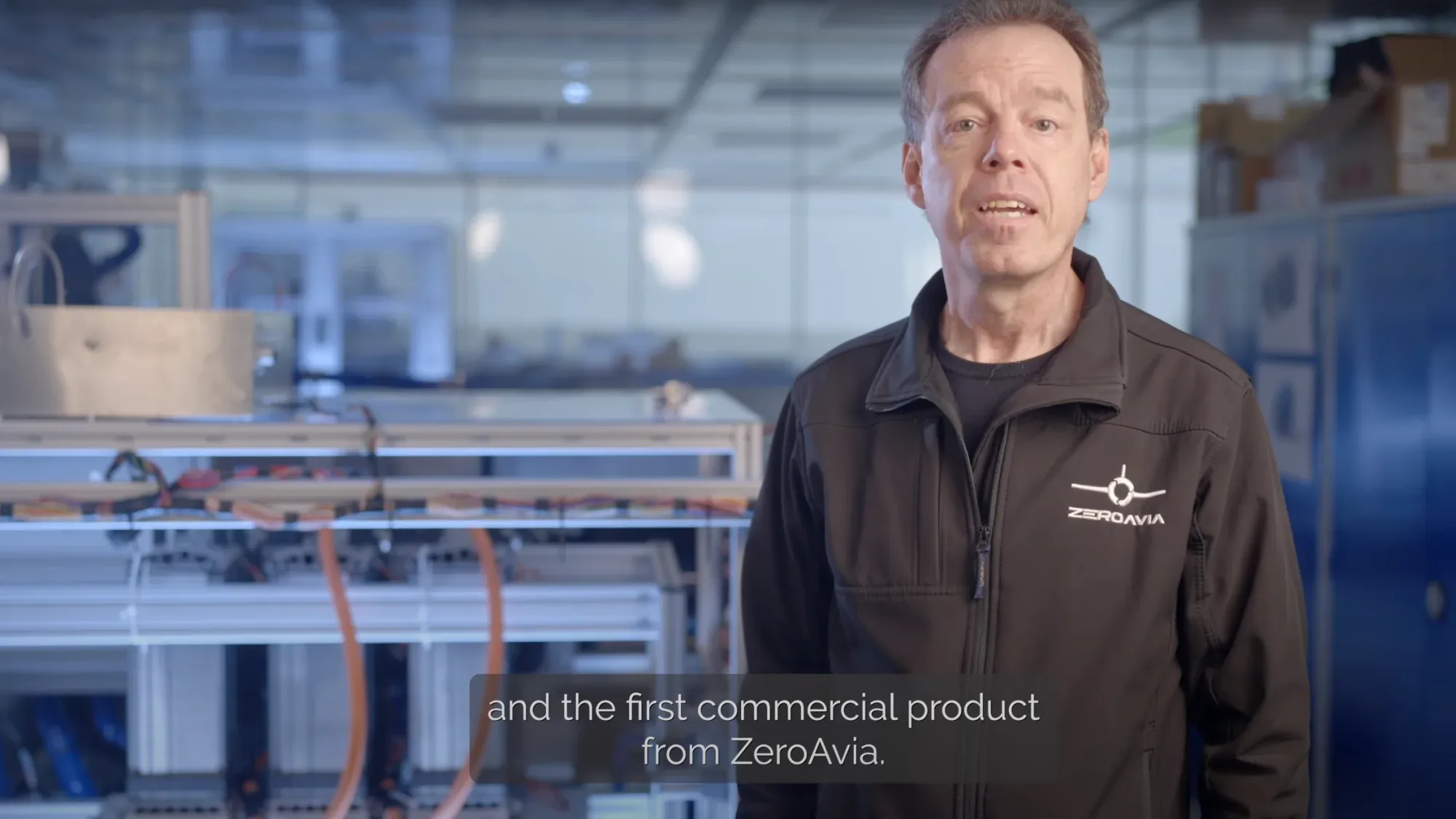
In this video, ZeroAvia's CTO Hydrogen, Rudolf Coertze walks through the power generation system that will drive the first commercial zero-emission aircraft in flight.
This film is part of our corporate film work. See all the films we make.
Read the transcript
Hello and welcome inside the belly of our fuel cell power generation beast here at Cotswold Airport in Kemble for the first in a series of behind the scenes technology deep dives. Today we're going to walk you through how our power generation system will work for powering the first commercial zero emission aircraft in flight. We are in our ISO clean lab here where we are building our fuel cell systems for the Z A 600. The Z A 600 is a 500 to 750 kilowatts continuous class hydrogen electric powertrain, and the first commercial product from ZeroAvia.
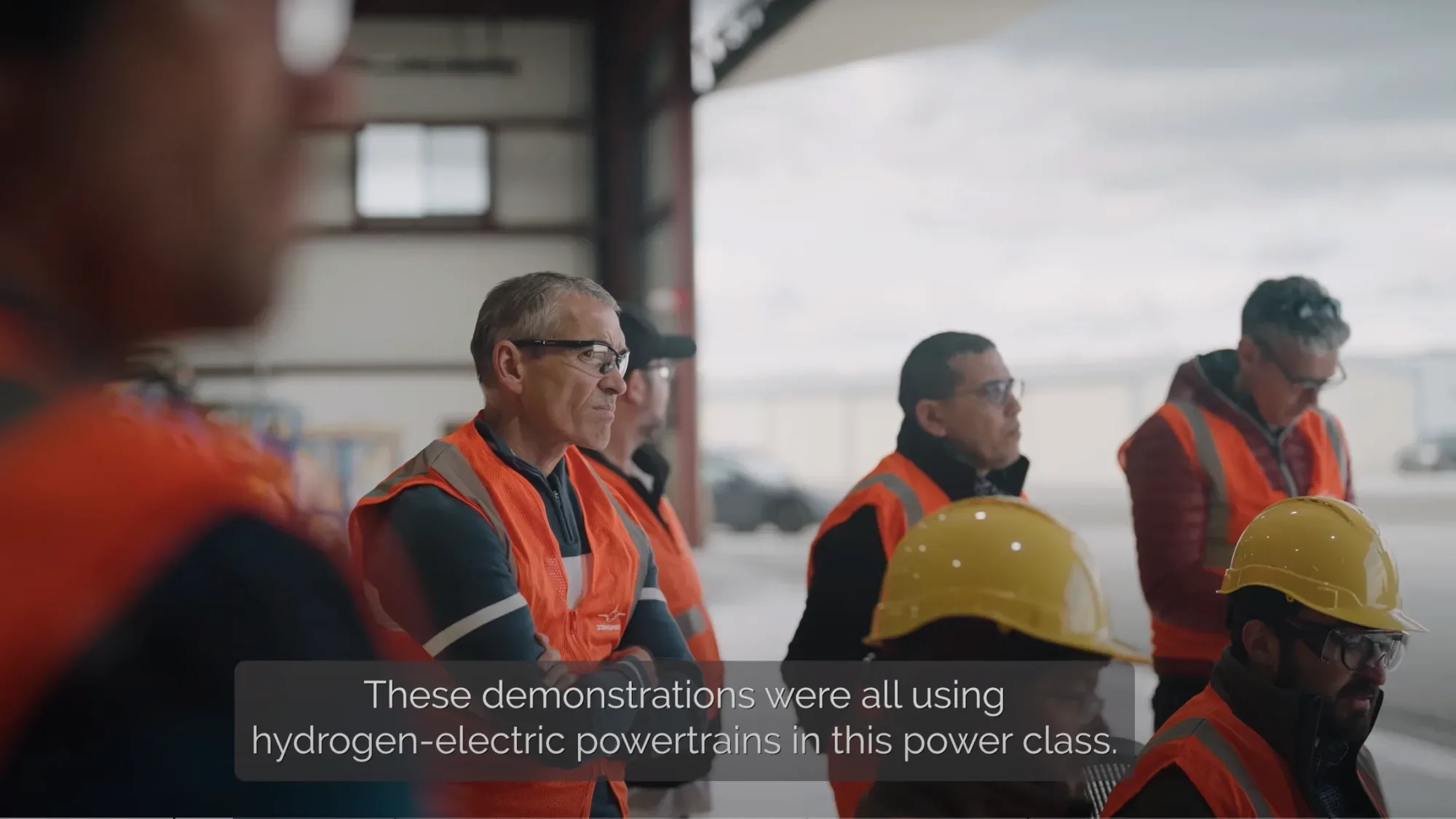
It'll deliver zero emission flight for thousands of 10 to 19 seat class aircraft turbo props, including the Cessna Grand Caravan, Twin Otter, and Dornier 228 airframes, which will receive supplemental type certification for retrofit and line fit. The first Z a 600 equipped commuter platform will be ready for service in 2025, fueled by gaseous hydrogen tanks and capable of carrying passengers up to 300 nautical miles plus reserves. You may have seen our own breakthrough flight of our Dornier 228 test bed and other recent demonstrations. These demonstrations were all using hydrogen electric powertrains in this power class to go beyond the 20 seat aircraft.
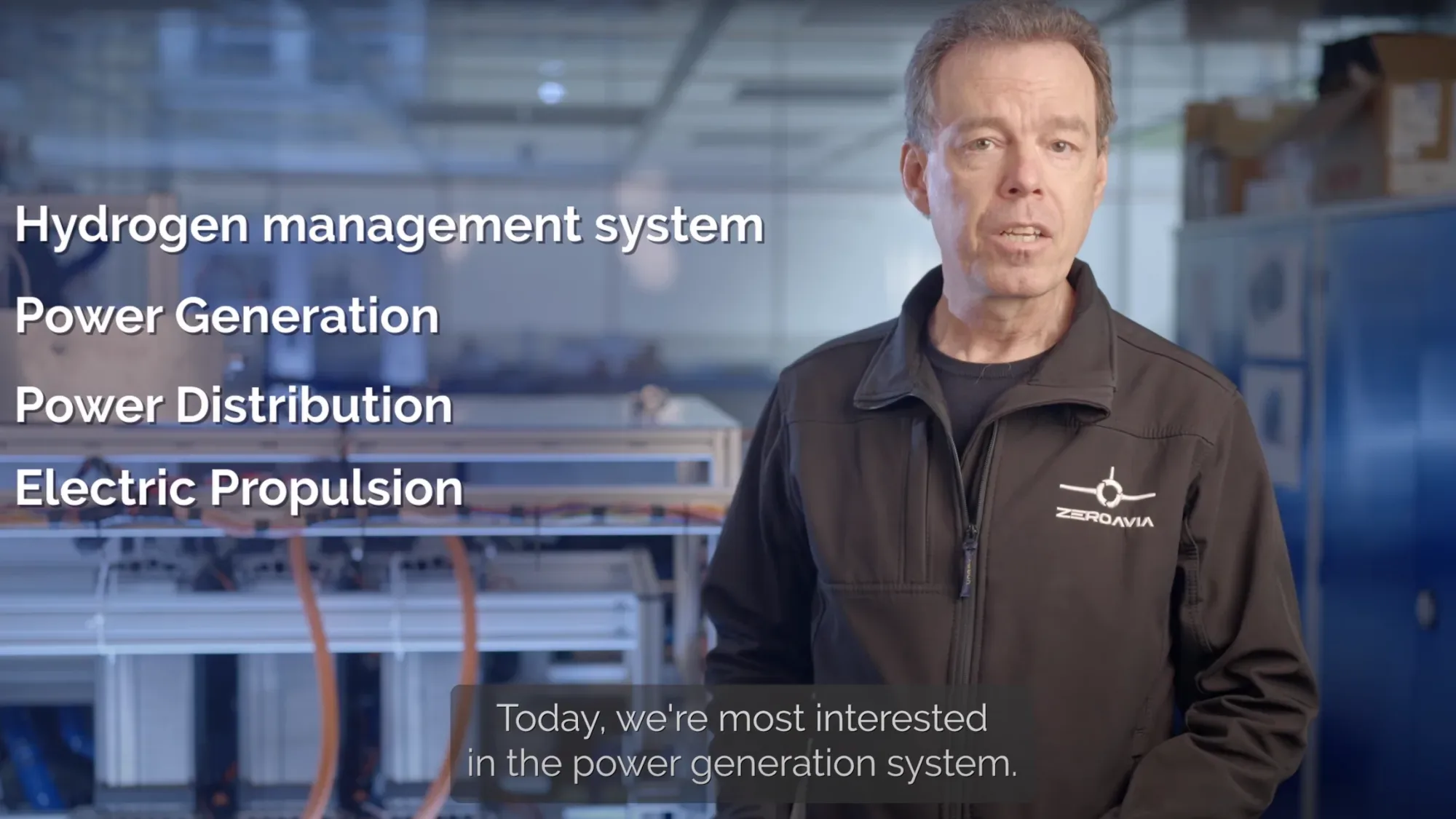
We need more powerful engines and we will cover these technologies in a further deep dive. First, let's walk through how the system works overall as part of the powertrain. Our system is made up of four distinct parts, a hydrogen management system, power generation, power distribution, and finally, electric propulsion. Today we are most interested in the power generation system.
How do we take the compressed hydrogen stored in tanks and use fuel cell systems to create as much electrical power as possible to power the electric propulsion systems? So what are we looking at? Here is a fuel cell stack provided by our partner PowerCell. Let's begin on how fuel cells stack really works.
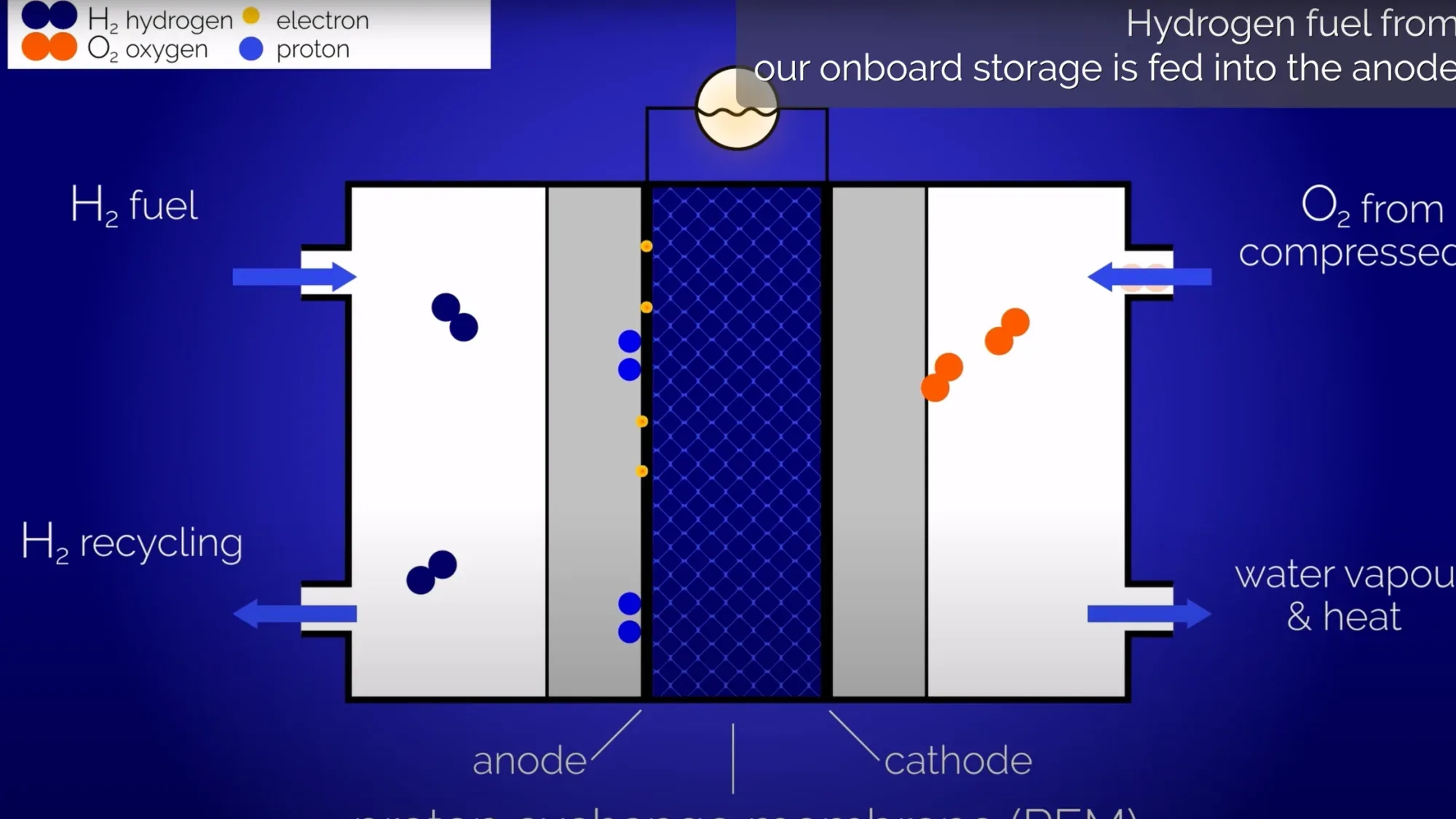
In principle, fuel cells generate electricity through an electrochemical reaction using hydrogen and oxygen with water and heat as byproducts, hydrogen fuel from our onboard storage is fed into the anode and compressed air to supply. Oxygen is fed into the cathode. A catalyst separates the hydrogen atoms into protons and electrons, which take different paths to the cathode protons pass through the membrane while electrons are being conducted in an external circuit to create the required flow of electricity. The byproducts of this process are water vapor and heat, and the average operating temperature is around 80 degrees Celsius.
To maintain the functioning of fuel cells, we need a balance of plant for these low temperature proton exchange membrane fuel cells. It consists of compressors to deliver the quantities of oxygen needed to the cathode humidifiers to control the humidity and ensure the fuel cells do not dry out or flood as well as liquid cooling and heat exchangers to prevent overheating and manage the temperature. Of course, there are also many pumps and sensors included. The low operating temperature of these fuel cells creates one of its chief advantages.
It means low wear and tear of the systems and thus enhanced durability and lower maintenance costs for larger systems flying at higher altitude. Lower temperatures will also mean we can distill and manage water vapor exhaust to prevent contrail impacts. At the same time, these lower operating temperatures also create a significant challenge as the total amount of heat rejected increases with the amount of power produced rejecting this heat becomes challenging because the temperature difference between the operating fuel cell and ambient temperatures is smaller than what you would find typically in combustion processes. Heat exchangers are critical and along with the compressors and humidifiers, they add weight to the system and thus affect the overall power density of the system.
These fuel cells are capable of high specific power at the cell level. This obviously is reduced at an overall system level, considering the weight of the balance of plant, given that these components themselves consume rather than generate power. In a typical configuration for automotive, the system level powered density is around 0.7 kilowatts per kilogram.
This is less of a concern, of course, when the vehicle does not need to take off. Our challenge is pioneering fuel cell engineers in aviation is to get the system level powered density to around 1.5 kilowatts per kilogram. Our in-house development of a balance of plant to support the fuel cell stack, which is optimized for space and weight, is part of this endeavor.
Enter the Super Stack, ZeroAvia's proprietary configuration to deliver the necessary fuel cell system for a type certified 600 kilowatt hydrogen electric engine. We have developed one of the highest power dense multi-stack modules available. The super stack module is capable of generating 400 kilowatt continuously and encapsulates many of the latest aviation fuel cell componentry technologies and offers an industry leading scalable power block, which helps us in achieving the targeted 1.5 kilowatts per kilogram specific power of the system, while the precise system architecture of the super stack remains IP sensitive.
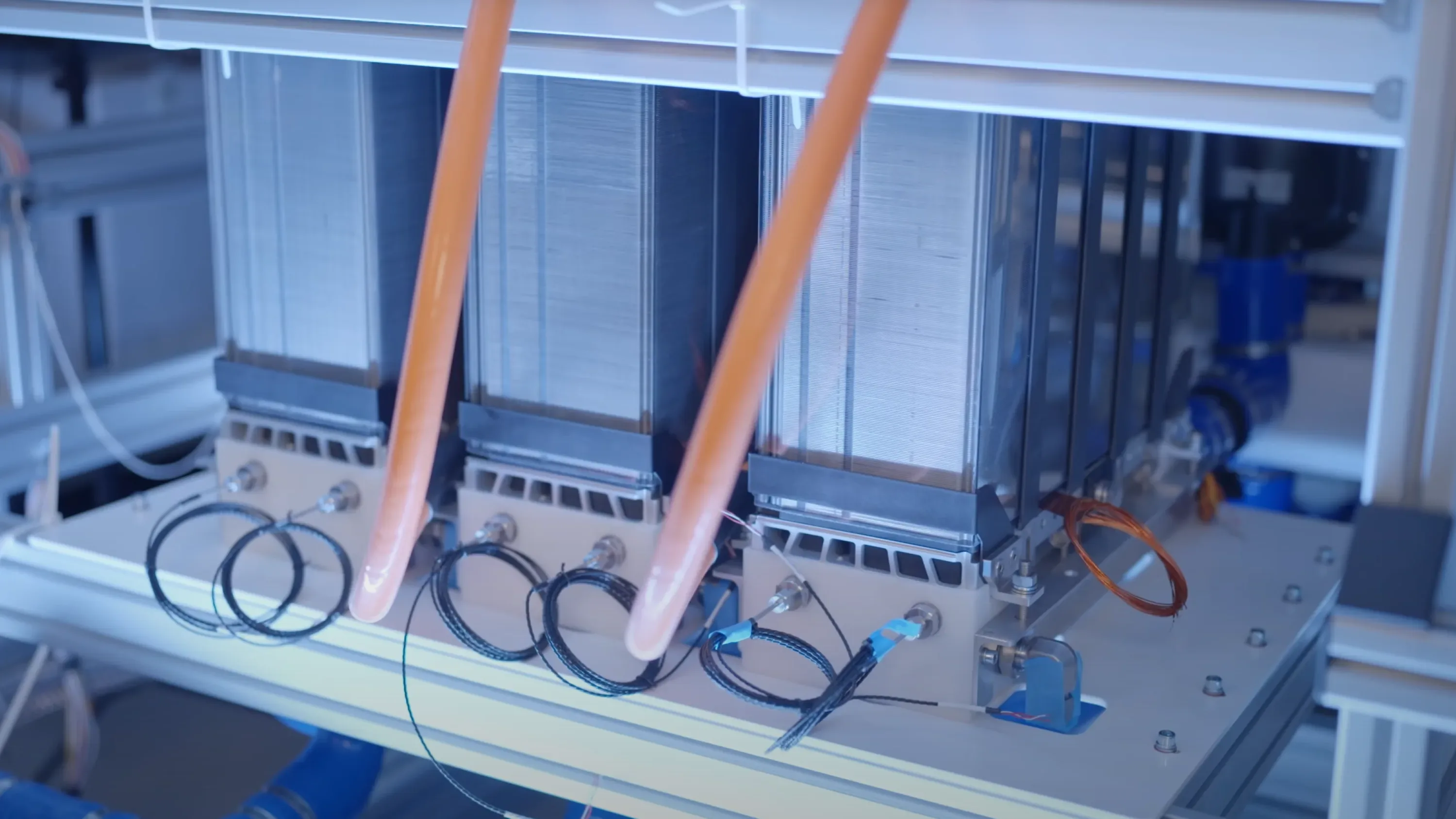
At this point, what we have designed is a system that can make the most efficient use of shared compressor, humidifiers, and optimized cooling systems. Behind me here is our open frame testing rig, which includes components that we will package down into a ZeroAvia Super Stack. You can see here the fuel cell stack. These consists of over 900 cells connected in series.
We are developing the super stack as a self-contained line replaceable unit, including its humidification and fluid management that will be installed in the aircraft to feed air to the super stacks in our ZA 600 power plant. We use a central compressor driven by our propulsion motor. This allows us to have a compact power plant with high specific power from our first 250 kilowatt powertrain system for the six seat aircraft. We have come a long way to flight testing the fuel cell systems and our prototype Z a 600 design.
We are moving ahead at speed towards certification of this system. It is a lot of hard work for me and the team, but we are motivated by the idea that these systems could be flying passengers and cargo in commercial operations in less than three years, a totally game-changing outcome for the future sustainability of aviation. If you want to learn more or discuss our technology under nda, please get in touch via our website or alternatively, we will try to answer as many of your questions in the comments to this video or in follow up videos. We'll be really intrigued to hear your questions and views on this exciting technology development.
Would you like a film like this? Start a film project