

Clinical Academies at Bristol Medical School
Our new film for the University of Bristol's Medical School.
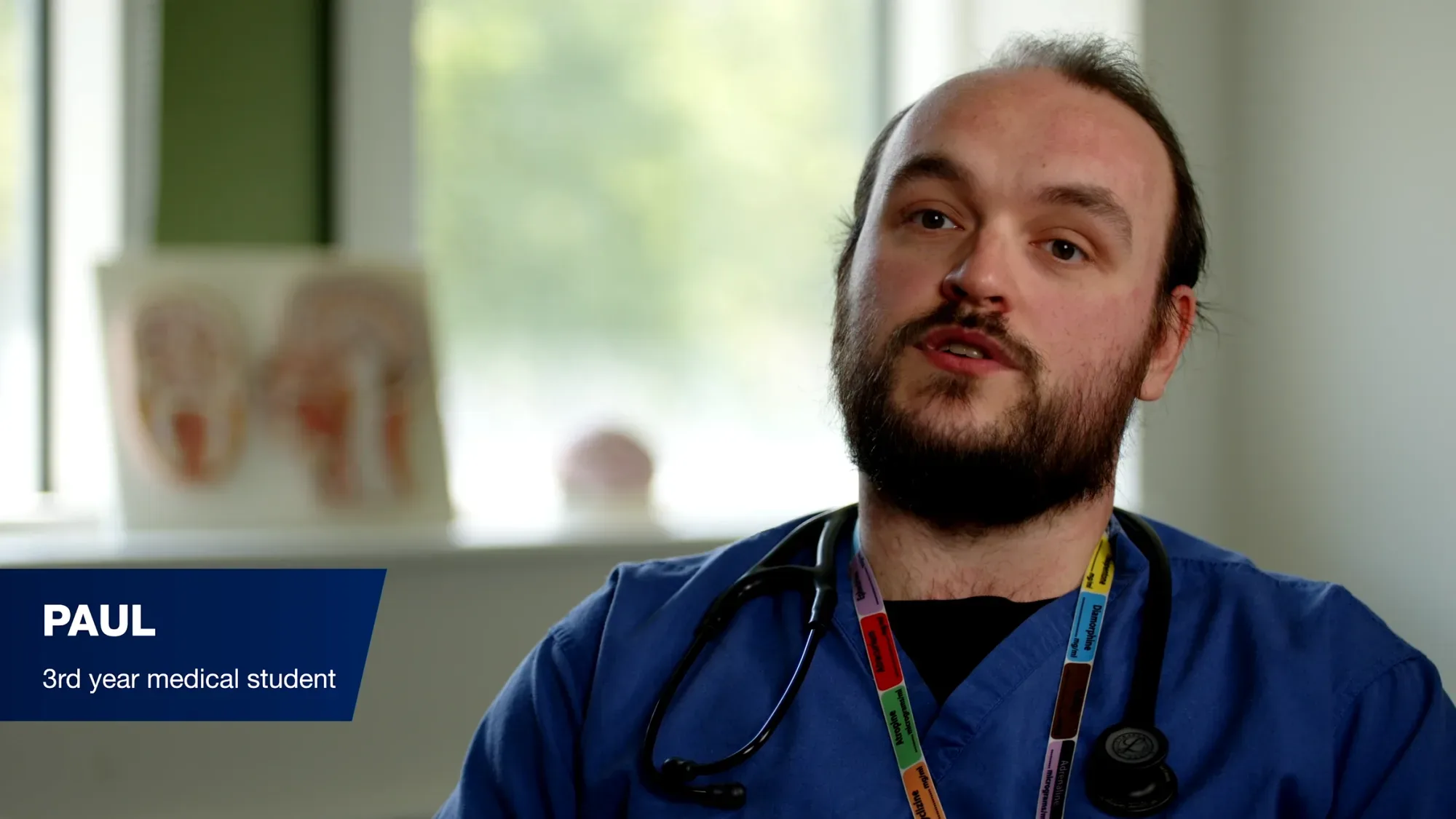
This film is part of our corporate film work. See all the films we make.
Read the transcript
I’d say absolutely come to Bristol. It’s been a wonderful six years. You get the benefit of living somewhere amazing. The course is engaging, it’s interesting.
It gives you the opportunity to pursue what you enjoy and want to learn more about. The people here are fantastic. The course has been designed with an emphasis on creating good and kind doctors. Spending time in lots of different environments, students will understand the breadth of clinical experience and understand the differences in our patient groups and the differences of how patients can be treated and their expectations.
And I think that’s a real strength in your medical education, to have that breadth of experience. Bristol is excellent because it really tries to make sure that you get to see patients from the outset. And so what you learn in the lectures is also mirrored by what you’re learning on placement as well. During your time in year one, you’ll also do three healthcare assistant shifts where you work here for 12 hours each time.
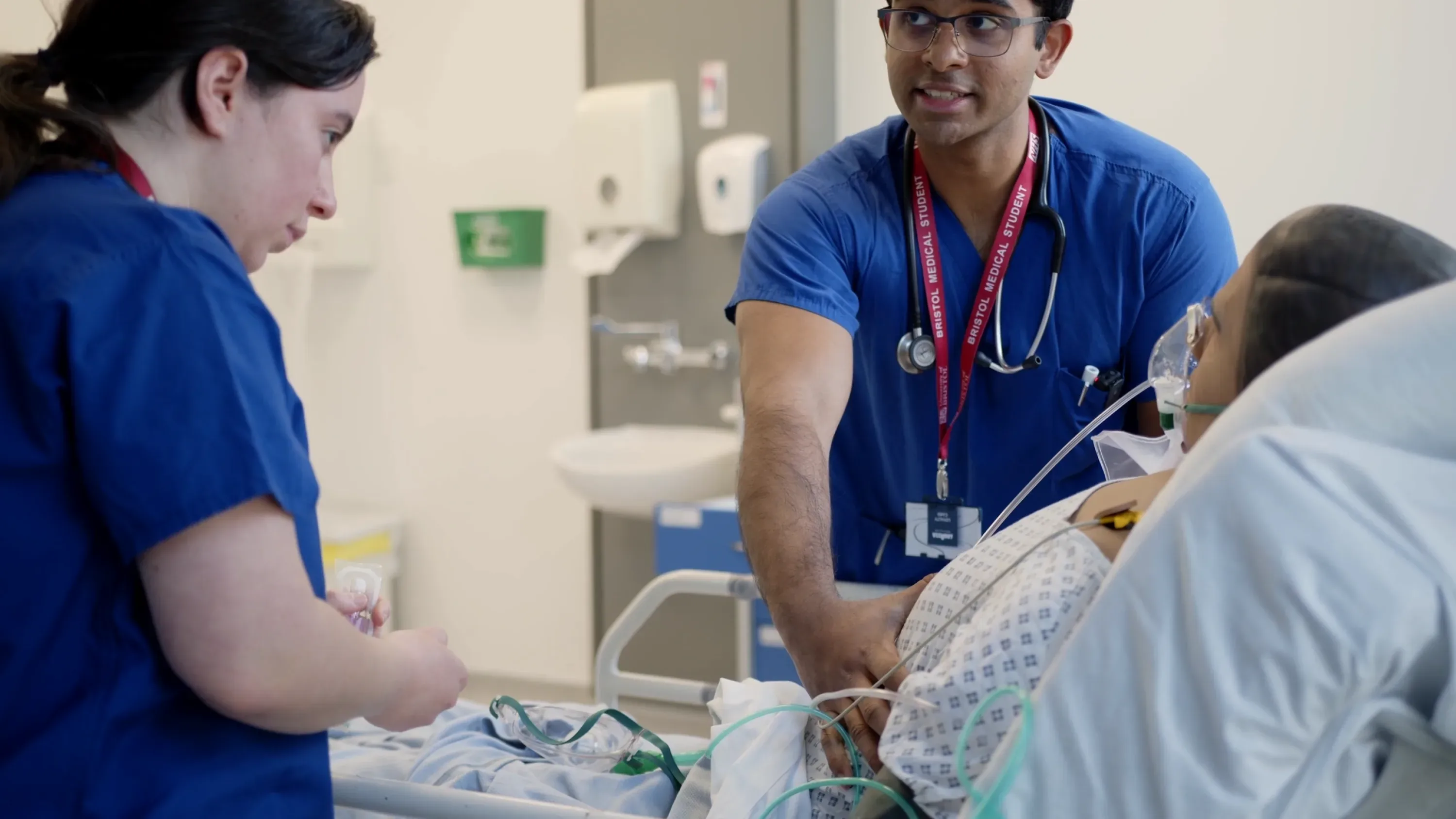
Then during that time you look after the patients, you look at their basic needs, you look at their care needs, you talk to them about what it’s like to be in hospital and you see the hospital and the management of patients from not necessarily a doctor’s perspective, but from the perspective of the nursing and caring team, which often can be forgotten as a doctor. In first year we learn how the human body works and then in second year you learn how it can go wrong and in third year we’re learning how to manage that, in a way how to fix it as best as you can. What we’ve done is actually increase the opportunities for them to see patients, observe what clinicians do, and from week two to three they’re in a GP surgery with the GP and meeting patients. And then from the third year onwards, their time is purely clinical so they will spend time in one of the hospitals, whether it is a Bristol hospital or one of the other academies, one of the other hospitals.
I’ve been to Yeovil, I’ve been up to Gloucester, Bath, and I’ve had the two big hospitals in Bristol and I think that’s of the utmost importance, the two very different types of hospital, and you might not realise that before you start medical school. Bristol has these huge tertiary referral centres. Patients get sent in from all over the region and that can be incredibly interesting. You see very specific, very rare cases, but I think it’s very important that you actually understand your general day-to-day medicine and you see that in the smaller hospitals a lot more.
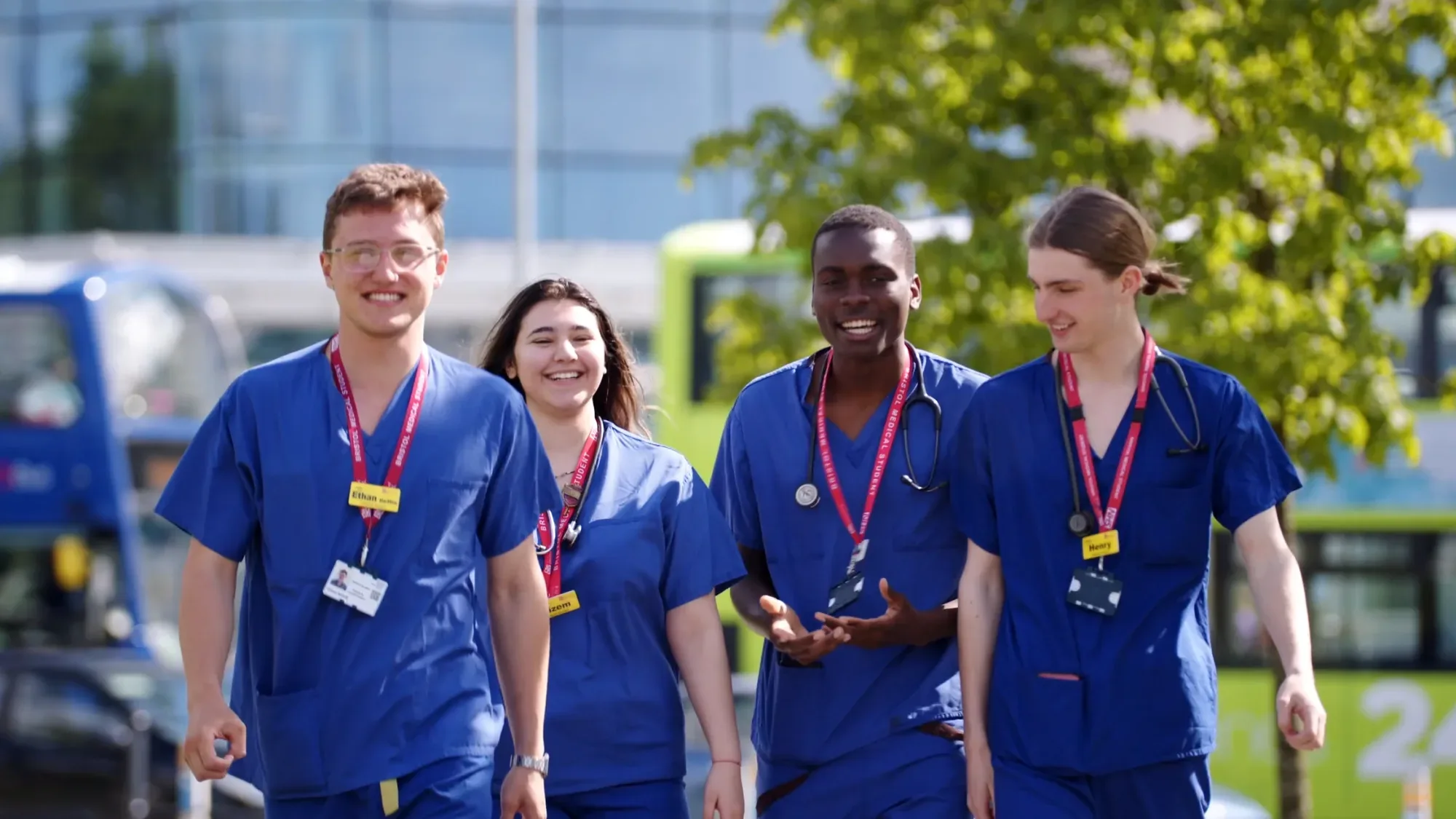
You get to see the best of both worlds with a smaller DGH, which is District General Hospital, and then a larger hospital like Southmead in Bristol. Being in Yeovil was a great opportunity for us to make friends for life. I think living with just eight other medics in the flat was just a really great experience. This sounds scary, but it’s actually fantastic.
You get to live with a group of medical students, you may have met before, you may not. You get to eat together, cook together, work together, and importantly there’s a fantastic social aspect. It’s good to live with like-minded people, which is a bit different from what you might be used to at uni living with people on different courses. And then on Friday I’d go back to my Bristol accommodation and be able to see my friends over there.
Thankfully the Yeovil accommodation is free and provided by the university, so I was able to keep my accommodation in Bristol and not feel completely disconnected from my friends over there. I’m so lucky every day to be like, these are the people I work with, and the support we have from each other and the ability we have to bring each other up is fantastic. We have a wide range of experience due to our training, both geographically and within clinical specialties, and not just from the doctor’s perspective but from the perspective of nurses, healthcare assistants and the rest of the team that make healthcare possible. If you are a medical student on my ward, you might spend time shadowing me on the ward round and doing some of the jobs that a foundation doctor might do, like writing in the notes or looking at drug charts.
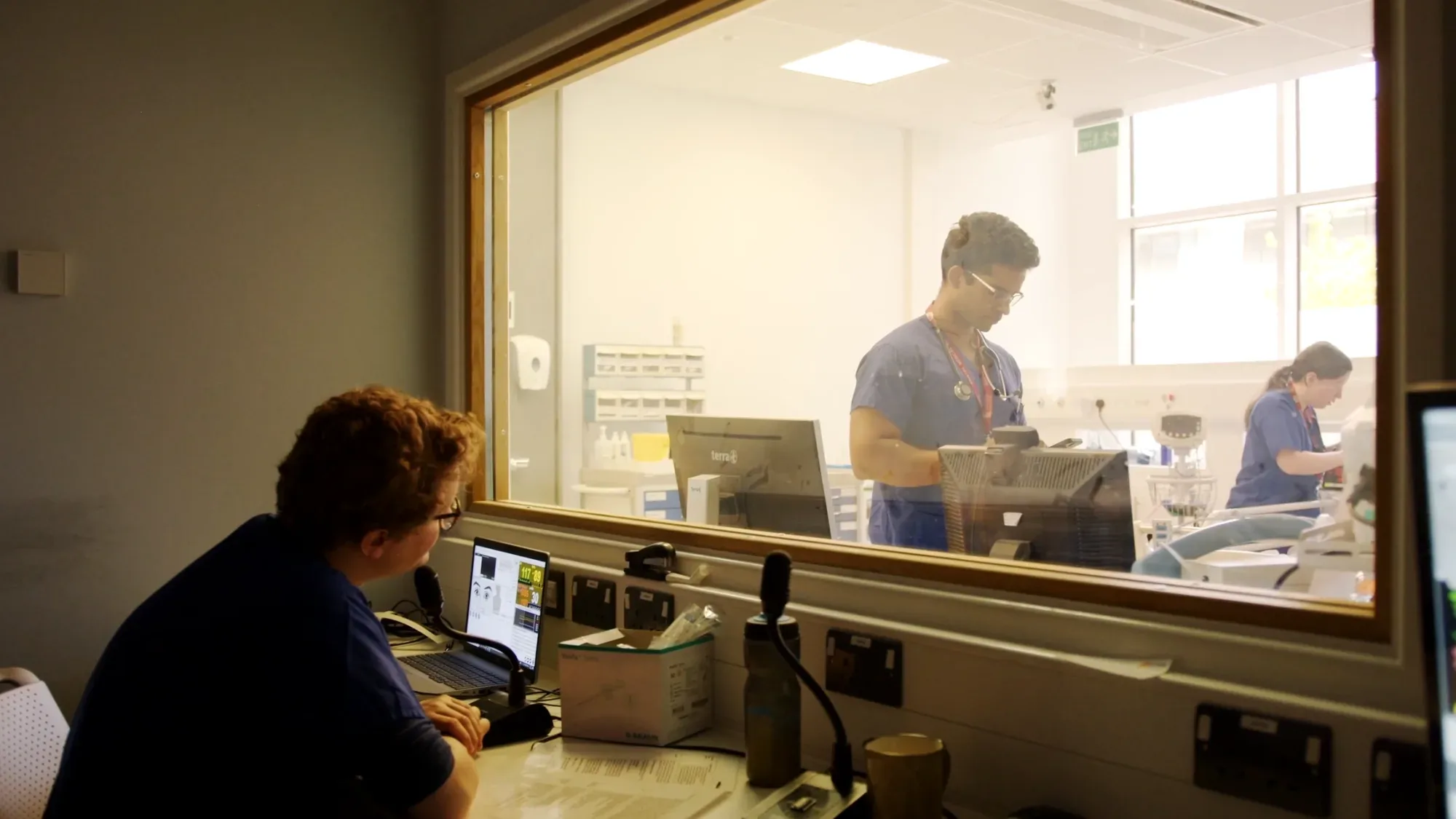
And alongside that, you also have simulations and scenarios where you pretend to speak to patients. So you have the real life experience as well as the analysis with your peers where you sort of recreate patient scenarios in a controlled environment. The models, you can hear their lung sounds, you can hear their heart sounds, you can administer cannulas and take bloods, so it feels like it’s as close to reality as possible and that can make it quite a high stress situation. But I think that means it’s useful because being on the ward is stressful; it allows you to appropriately prepare.
So that gives you the opportunity to make mistakes and work things out in a way that is still safe, with the benefit of the feedback of your peers and the tutors. I’m coming towards the end of medical school now, so I’m going to be starting work in August. So I think it’s all starting to feel a bit more real. I think that’s when these simulation scenarios are most helpful, but also in some ways most stressful.
I think that will leave you better prepared for real work. While we spend time in the hospital learning about secondary care and how medicine’s managed acutely, for example if patients are acutely unwell, we also learn how patients are managed long term in the community and that’s really great to understand that kind of interplay between the two, because health is not just about immediately treating the patient but it’s about seeing them over time as well. Then we get the opportunity to put that into action and meet some real patients and consult using the skills that we’ve learned from case-based learning and effective consulting, and have the opportunity to consult and really get to grips with what being a doctor is actually like. So for example, in fourth and fifth year, the students have their own clinics where they’re seeing patients and then afterwards they’re reviewed and discussed with a doctor, but they will see the patient, ask the history, examine the patients, and then come up with a suggested plan and then we’ll discuss it and work something out together.
On another placement I was able to go on a home visit with one of the nurses, which enabled me to see a patient in their own environment, and generally that kind of breadth of experience and the opportunity to go out into the community was really fantastic and helped my learning. All the confusion, all the complexity of our lives are revealed in general practice. One of the students said that a GP had said to her, you’ve got a VIP seat, and actually that’s what you have. You’ve got a VIP seat on the human condition and that’s a tremendous privilege.
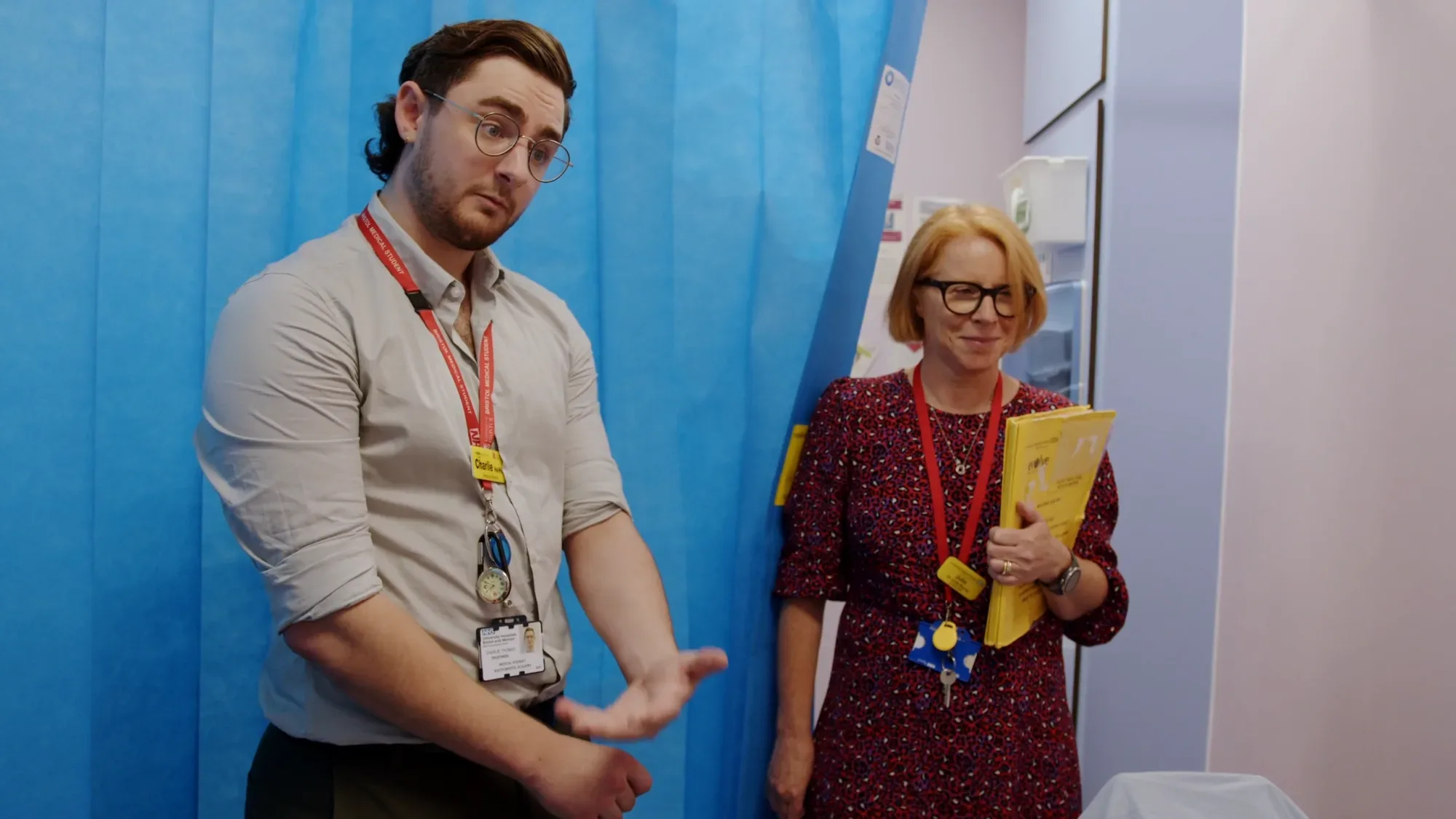
After every consultation you have the opportunity to talk to the GP, get feedback, and sometimes you might have a really difficult consultation, which is what happens when it comes to medicine, and that’s a really good opportunity to talk it over with the GP, get their advice and help, both learn from it and also process it, so it’s a good support mechanism. We are taught from the early outset that medicine is all about trying to treat the patient and not just the condition. And so we’ve learned about patient-centred care, which basically involves thinking about the patient and what means most to them. All of our academies have the student experience at the heart of what they do, and I think that’s the most important thing to all of us, and as well as delivering the learning that they need, to make sure that they are enjoying their time and having a really good learning experience is really important to us.
Students do need extra support, so they may need support academically or they may need support because they’re having a difficult time, and the academy structure allows us to deliver that. It’s definitely lived up to my expectations when it comes to engaging with patients and prioritising patients and learning properly how to communicate. I think Bristol has really tried to make the best type of doctors that they can and I think I can see that in my cohort who are all graduating in the next month. I think all of them are kind and empathetic and I trust them all to treat me.
I chose Bristol because I came to the city and I loved it and I thought it was really vibrant and the medical course seems really holistic. You’ve got lots of opportunity to meet patients early on and that continued throughout. If you are the type of person who enjoys talking to patients and likes having a hands-on approach, Bristol’s a really great university for that. Students who come to Bristol are coming to a course where the programmes are being thought through really carefully to make sure that we are preparing our students for clinical practice, and I think it produces really brilliant high quality foundation doctors, which is after all what the course is designed to do.
Would you like a film like this? Start a film project