
Innovation Across Our Locations
Following the May 2023 delivery of Zeroavias Dash 8 76-seater, provided by Alaska Airlines, we have put together this film showing the amazing growth to date of this groundbreaking company as they work towards a zero emissions future. Work on creating a hydrogen powertrain for this large aircraft is now underway!
This film is part of our corporate film work. See all the films we make.
Read the transcript
At ZeroAvia, we build the future of aviation power plants. We're building new types of engines that will replace fossil fuel engines in all types of aircraft over time. Our mission here is hydrogen electric engine in every aircraft. Welcome to ZeroAvia, Cotswolds.
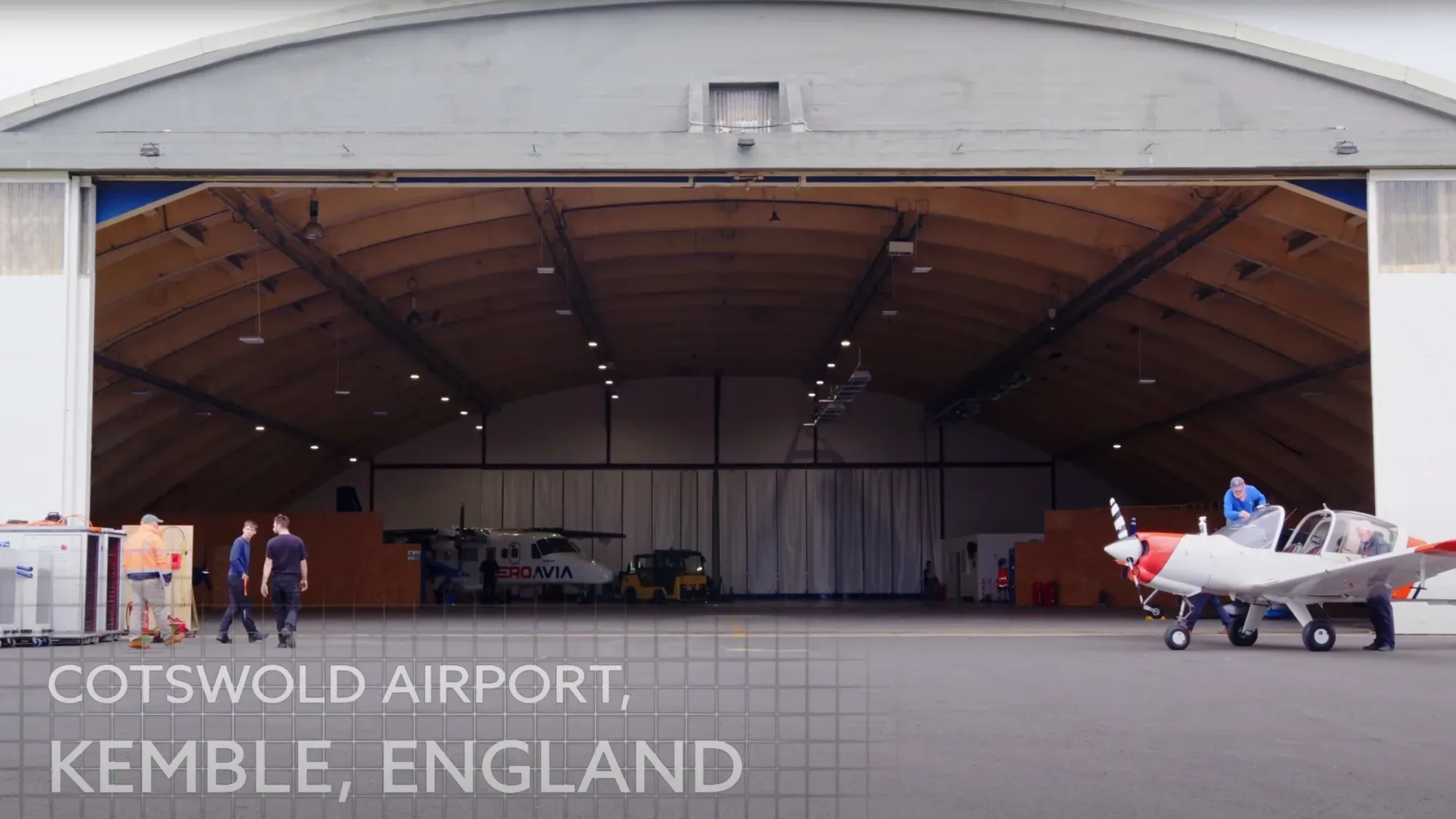
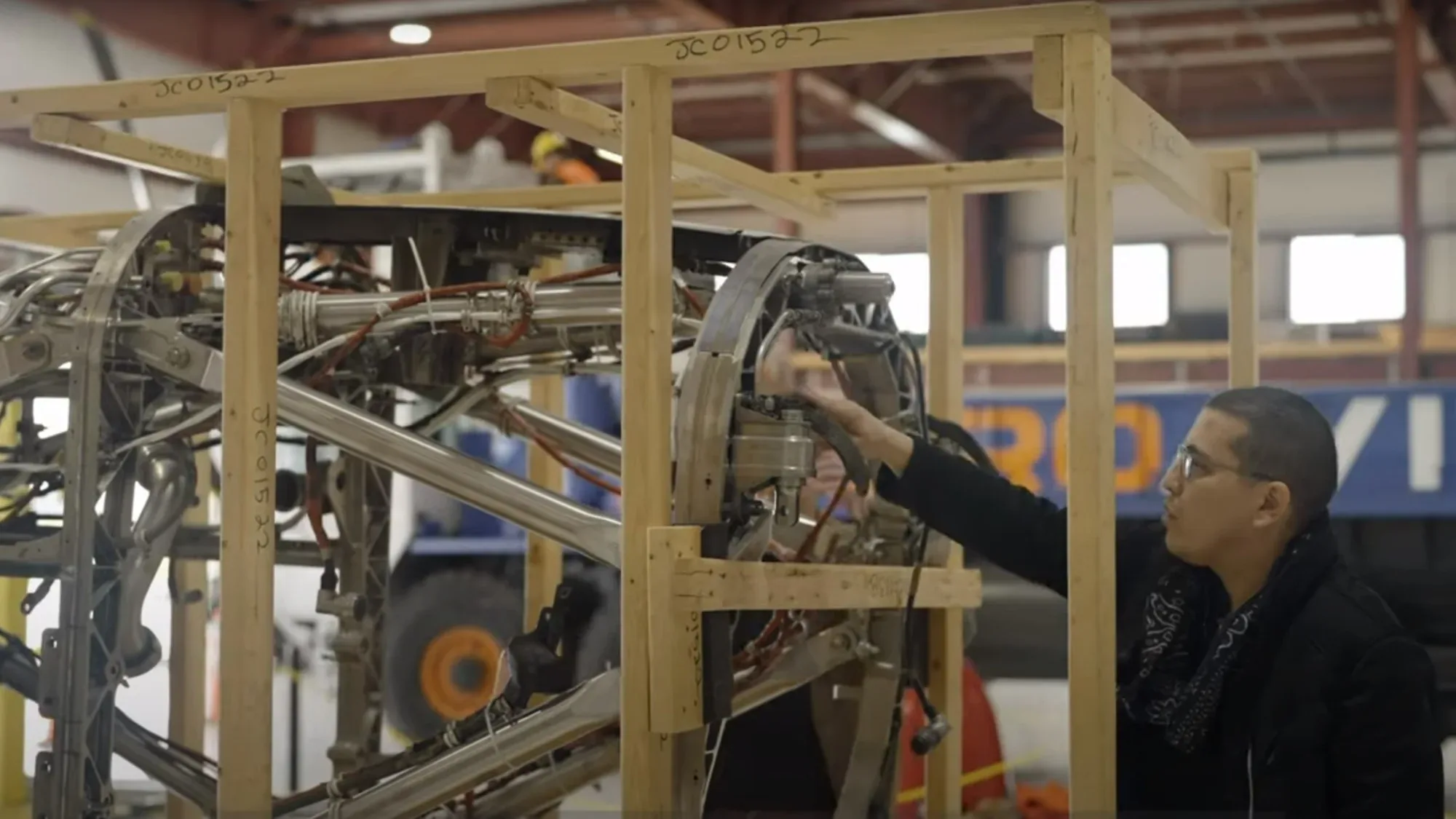
This is our main location in the UK. So this is our historic hangar here, from the World War II. And now we're making history here again with our great zero-emission technology. So the power plants, the launch version of the power plants that we're building, is actually six of these stacks combined together in a high-density format to power our launch vehicle.
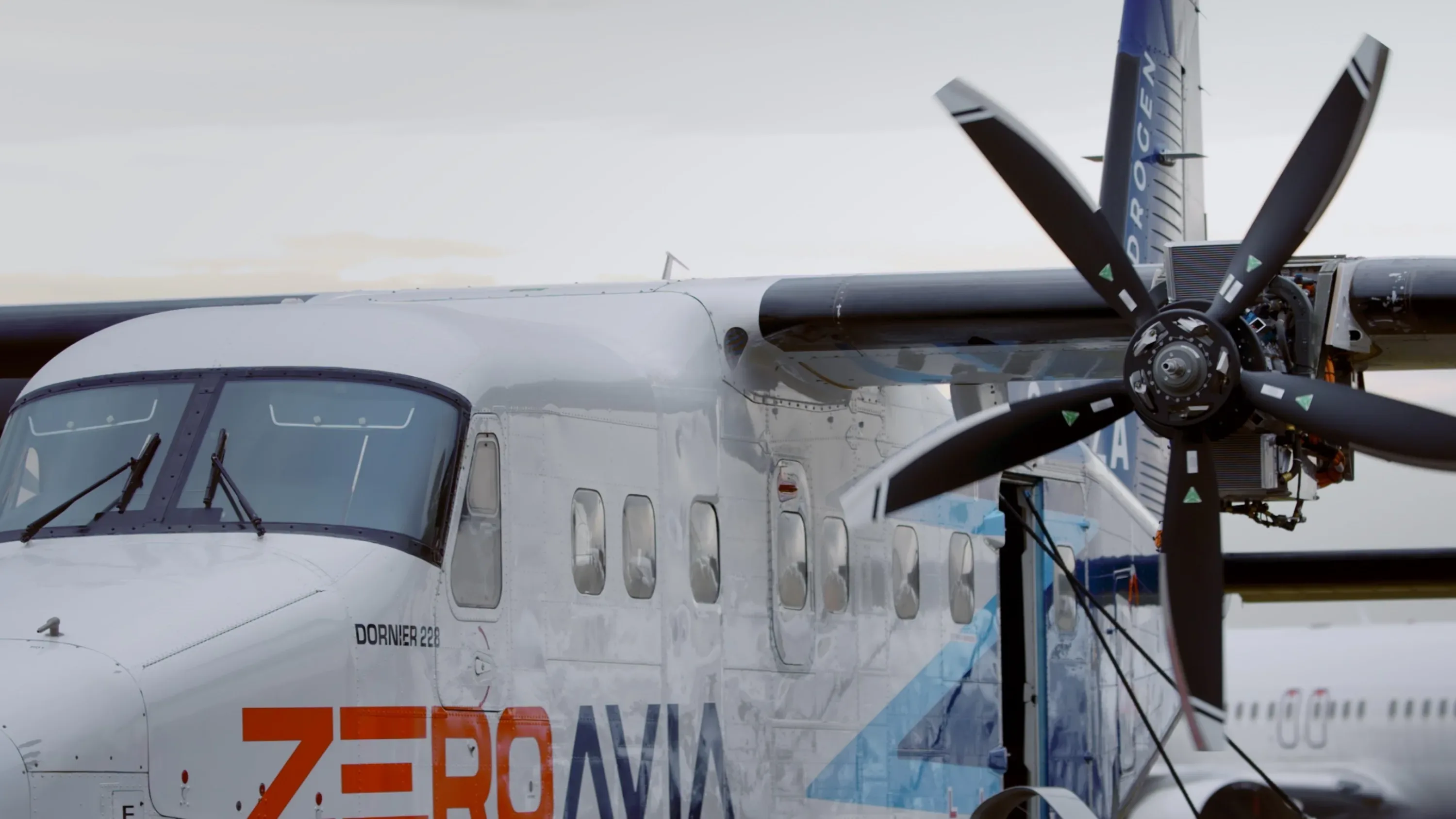
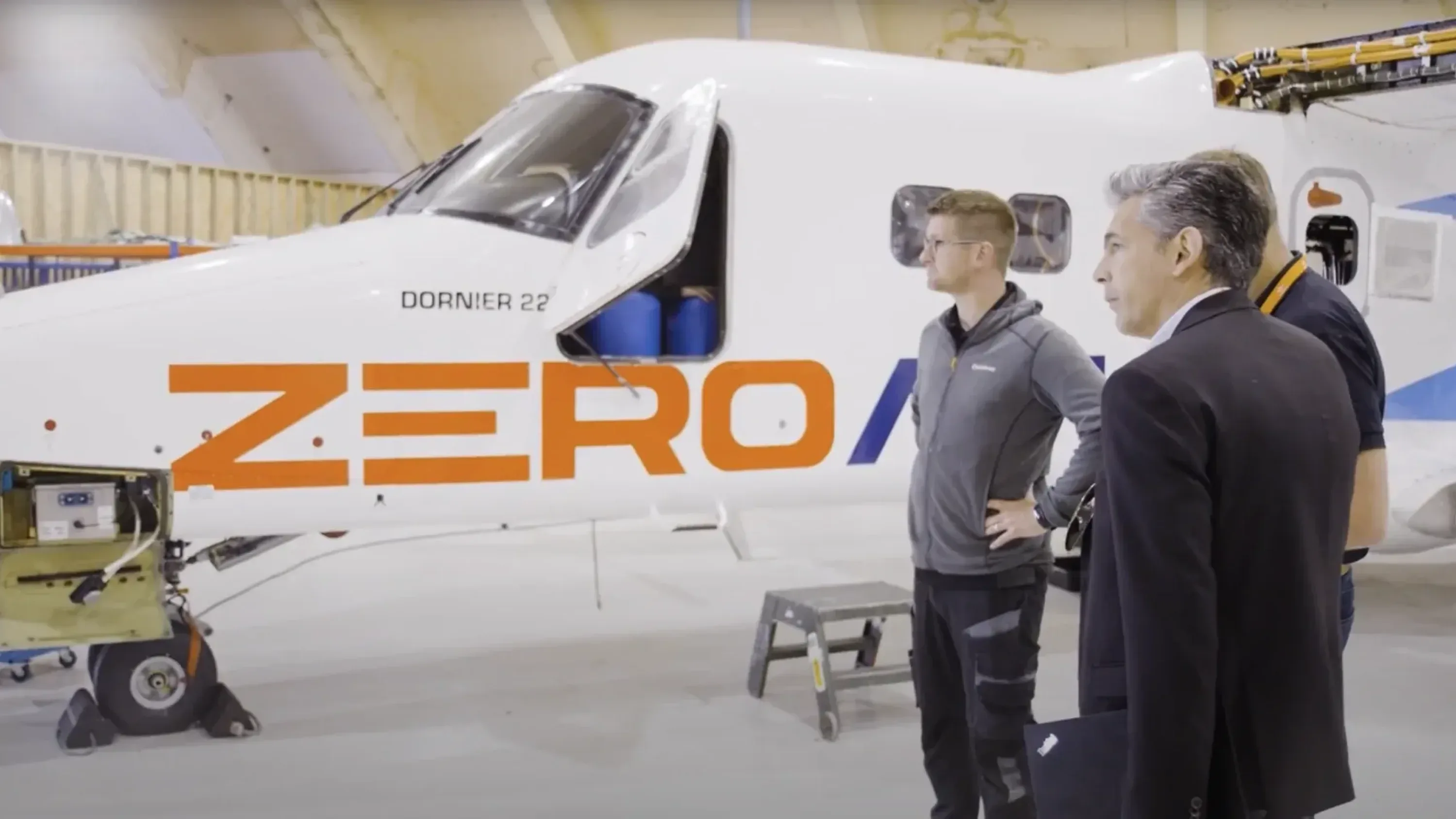
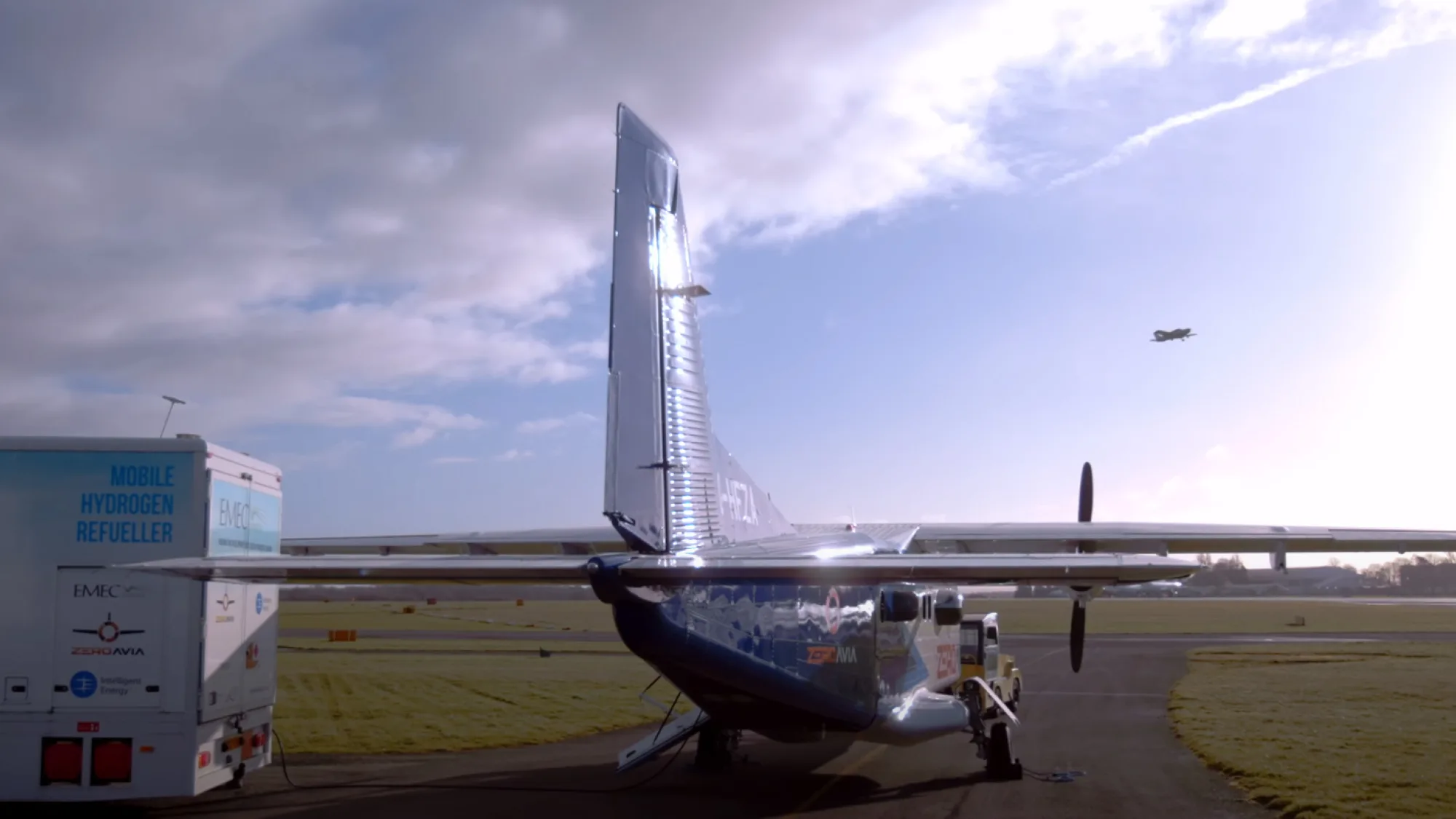
We are in front of the aircraft. It was an original Dornier 228 aircraft. We have transformed it in a flying test lab, which is bringing the system all together, integrating into the aircraft, testing it on the ground, and then bring it outside the hangar and flying with it. Great facility here in Cotswolds, where there was nothing of this kind before.
In just a year and a half, it's over 100 people now, building the future of aviation here in the UK. When it comes to scaling fuel cell power for larger engines in larger aircraft, the thermal management and management of thermal energy becomes really, really important. And this is where HTPEM fuel cells start to show a significant advantage. Here, we start from the tiniest part of this assembly, and this is catalyst.
We work on the development of the new type of catalyst for the high-temperature PEM technology. Here, we manufacture our high-temperature PEM fuel cell stacks. Currently, I'm assembling one of our short stacks, which consists of six cells. This is a good way to find out new things for our stacks in an efficient, quick manner.
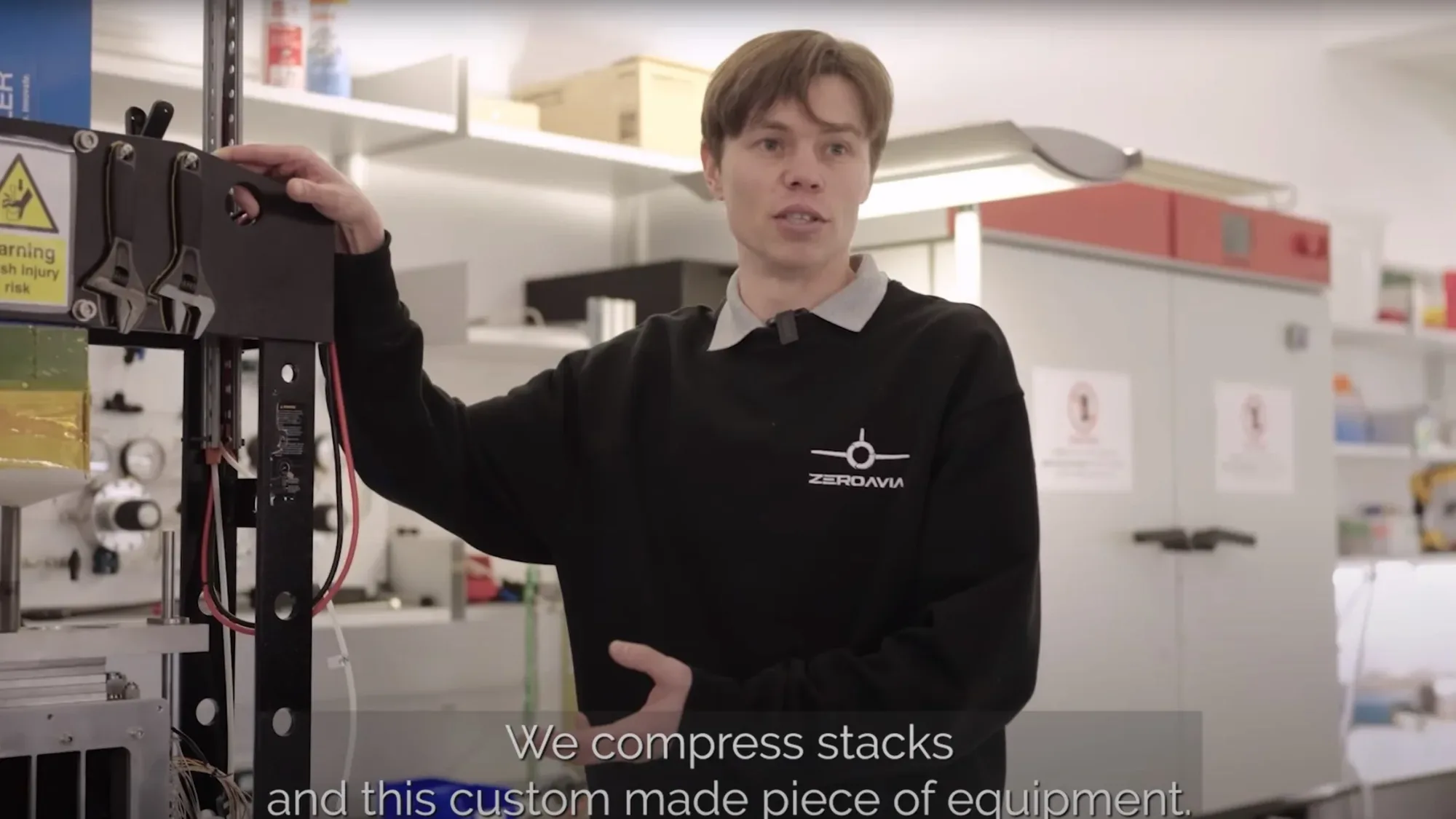
We can press stacks at this custom-made piece of equipment. So our tests start here with our 45 square centimeter test station. On this test station, we're able to test MEAs of this size. They have an anode side and a cathode side, and the membrane, the high-temperature membrane, sits in the middle between the electrodes.
We put them in test cells here with graphitic plates. We can test two cells at a time. We can vary temperature, we can vary pressure. We test at temperatures between 140 C all the way up to 200 C now with the new membranes that we're getting, and we can do pressure as well.
So 250 kPa up to 300 kPa. Hollister is really more application and testing. So our focus here is really more integrations of full systems and testing from hydrogen in to thrust out. Welcome, guys, in Seattle ZeroAvia facility here in Paine Field.
Here we are designing the propulsion system from the power electronics to software to hardware in the loop to the motor. Here is the most important piece in the office, which is the assembly and production line. This is the C1 hangar and let's go inside. This would be the largest hydrogen zero emissions electric airplane.
Years from now, you will look back and say, "This is the time when the transformation of real large aircraft, real commercial aircraft started." We think that history is being created right here. We'll look back years from now at this point as the start of something beautiful.
Would you like a film like this? Start a film project